Winter Olympics Snowboarding 2026: Events, Athletes, Venues, and What to Expect
 MUBASHIR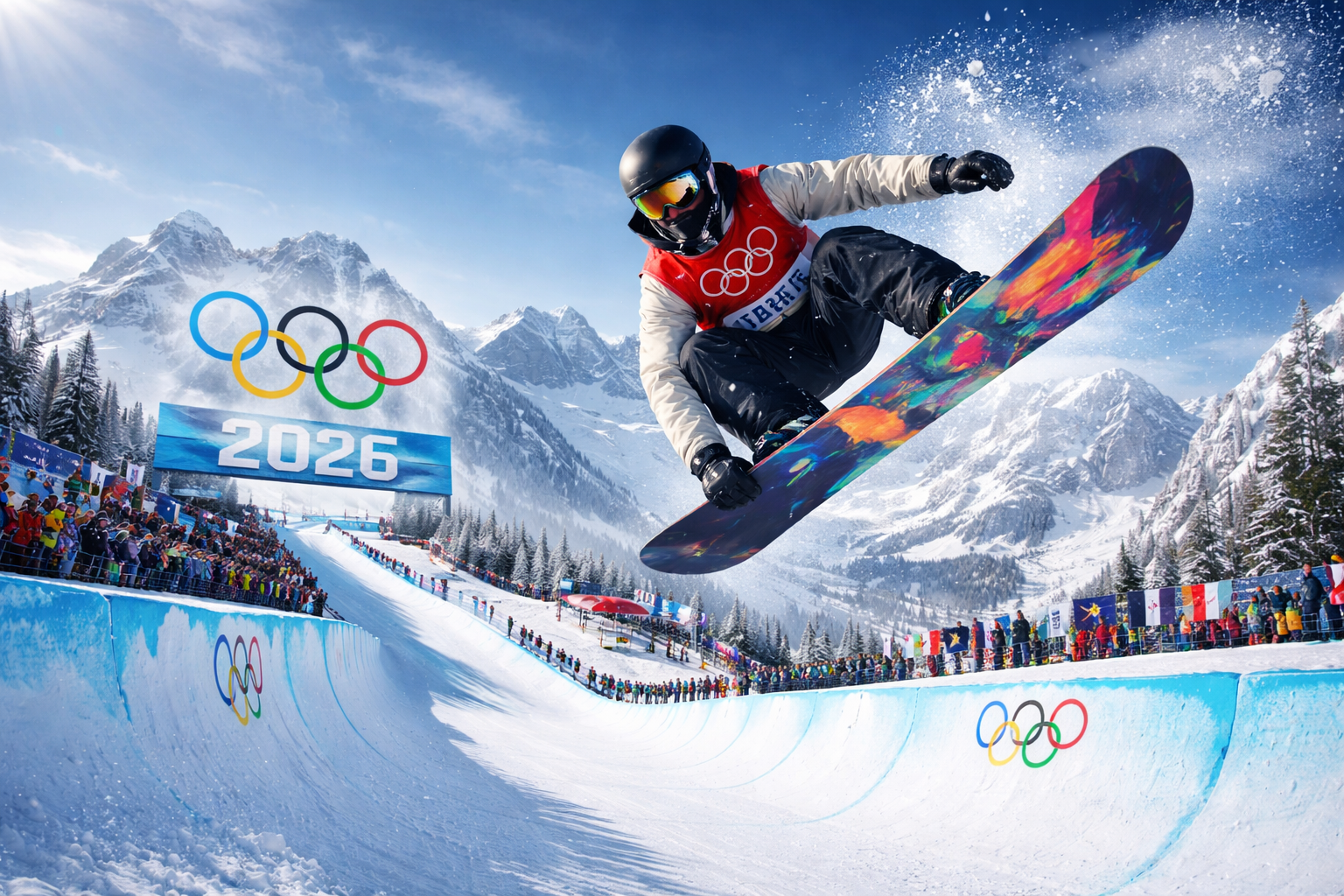
The Winter Olympics snowboarding 2026 competition is set to be one of the most closely watched parts of the Milan–Cortina Games. Snowboarding has grown from a fringe winter sport into a global spectacle, and the Olympics now represent its highest stage. For fans, athletes, and newcomers alike, 2026 offers a chance to see how the sport continues to evolve—technically, creatively, and competitively.
Unlike earlier Olympic eras, where snowboarding was still finding its identity, today’s riders arrive with years of professional circuit experience, refined training systems, and a strong personal style. The result is a mix of athletic precision and individual expression that few other Olympic sports can match.
This article looks at how snowboarding fits into the 2026 Winter Games, which events matter most, who is likely to shine, and why these competitions feel different from anything we saw a decade ago.
The Place of Snowboarding in the Winter Olympics
Snowboarding entered the Olympics in 1998, and its early years were marked by tension between traditional federations and rider culture. Over time, that gap narrowed. By 2026, snowboarding is no longer the “alternative” sport of the Games. It is central to the winter program.
What makes Olympic snowboarding unique is its balance. Judges and officials look for technical difficulty, execution, and consistency. At the same time, riders are rewarded for creativity, line choice, and personal style. That balance is difficult to maintain, but it is what keeps the sport credible in both athletic and cultural terms.
The Winter Olympics snowboarding 2026 events will continue this approach, combining structured competition with room for innovation.
Winter Olympics Snowboarding 2026: Venues and Mountain Conditions
The Milan–Cortina Games will be spread across northern Italy, with mountain events hosted in established Alpine regions. Snowboarding competitions are expected to take place in areas known for reliable winter conditions and existing infrastructure.
These venues matter more than many viewers realize.
Course designers work with the natural terrain, snow quality, and weather patterns of each mountain. A halfpipe built in dry, compact snow behaves differently from one shaped in wetter conditions. Slopestyle features may ride faster or slower depending on temperature and grooming methods.
In northern Italy, winter conditions can vary. Some years bring deep, consistent snowfall. Others require extensive snow management. Organizers are preparing for this by using modern snowmaking systems and flexible course layouts.
For riders, this means adaptability will be crucial. Those who can adjust their approach quickly—changing takeoff angles, speed control, or trick selection—often perform better than those who rely on fixed routines.
Winter Olympics Snowboarding 2026 Events and Disciplines
The Winter Olympics snowboarding 2026 program is expected to include the same core disciplines that have defined recent Games. Each event tests a different aspect of riding.
Halfpipe
Halfpipe remains the most recognizable Olympic snowboarding event. Riders perform a series of tricks while moving back and forth between vertical walls of snow.
Judges look for:
- Height (amplitude)
- Technical difficulty
- Clean landings
- Flow between tricks
In recent years, halfpipe runs have become more complex. Double corks and multiple rotations are now standard. By 2026, consistency will matter more than sheer risk. A slightly simpler run landed perfectly can often beat a risky run with small mistakes.
Slopestyle
Slopestyle takes place on a course filled with rails, boxes, jumps, and creative features. It rewards versatility more than any other discipline.
A strong slopestyle rider must be comfortable switching between:
- Technical rail tricks
- Large aerial maneuvers
- Smooth transitions
This event often produces surprises. Riders who struggle in halfpipe sometimes excel here because of their street and park backgrounds.
Big Air
Big Air is the simplest format on paper and one of the hardest in practice. Riders hit a single massive jump and perform their most difficult tricks.
Because there is no second chance within a run, pressure is intense. A minor timing error can ruin an attempt.
Big Air competitions at recent Olympics have shown that mental preparation is as important as physical skill. Riders who manage nerves well tend to succeed.
Snowboard Cross (Snowboardercross)
Snowboard cross is very different from judged events. Several riders race simultaneously down a course filled with jumps, turns, and obstacles.
This discipline emphasizes:
- Speed
- Tactical positioning
- Physical resilience
Crashes are common, and outcomes can change quickly. Even top-ranked athletes can be eliminated early due to small mistakes or collisions.
How Judging and Scoring Are Evolving
Judging in snowboarding has improved significantly over the last decade. Early Olympic events were criticized for inconsistent scores and unclear standards. Today, systems are more transparent and data-driven.
Still, subjectivity remains part of the sport.
Judges weigh factors such as:
- Difficulty level
- Variety of tricks
- Execution quality
- Overall impression
In 2026, one trend is likely to continue: rewarding well-rounded runs over single standout tricks. Riders who show control from start to finish are usually favored.
At the same time, judging panels are becoming more international, which helps reduce regional bias. This matters in a sport where styles and preferences can vary by country.
Leading Athletes and Rising Contenders
Predicting Olympic medalists two years in advance is risky. Injuries, form changes, and equipment developments can alter careers quickly. Still, certain patterns are worth noting.
Established Champions
Many riders who dominated the 2018 and 2022 Games remain active. These athletes bring experience, competition management skills, and strong support teams.
Veteran riders often excel in:
- Pressure situations
- Course adaptation
- Strategic run planning
They may not always attempt the hardest tricks, but they know how to win.
Emerging Talent
Younger riders entering the professional scene have grown up with advanced training facilities and online video analysis. They learn complex tricks earlier than previous generations.
These athletes tend to:
- Push technical limits
- Take greater risks
- Introduce new combinations
At the Winter Olympics snowboarding 2026, at least a few medalists are likely to come from this new generation.
Team Dynamics
National teams now play a larger role than before. Coaching staff, sports psychologists, and video analysts help riders prepare in detail. Countries with strong development systems—such as Japan, the United States, Canada, and parts of Europe—often gain an advantage.
Equipment, Technology, and Training Methods
Snowboarding equipment has changed quietly but significantly. Boards are lighter, more responsive, and tailored to specific disciplines. Boots and bindings offer better energy transfer without sacrificing comfort.
By 2026, most elite riders will be using:
- Custom-shaped boards
- Heat-molded boots
- Precision-tuned bindings
Training has also become more scientific. Athletes now rely on:
- Video breakdowns
- Motion tracking
- Strength and mobility programs
Many riders spend time in indoor facilities or on artificial surfaces during off-season periods. This allows them to practice complex tricks safely before trying them on snow.
One consequence is that competition levels keep rising. What was medal-worthy in 2014 would likely not qualify for finals in 2026.
Media Coverage and Global Interest
Snowboarding performs well in modern media environments. Short clips of impressive tricks spread quickly on social platforms, bringing casual viewers into the sport.
For the Milan–Cortina Games, broadcasters are expected to use:
- More on-board cameras
- Athlete microphones
- Behind-the-scenes content
This helps viewers understand what riders are thinking and feeling before big runs. It also makes the sport more relatable.
In many countries, snowboarding now attracts young audiences who may not watch traditional winter sports. This keeps it relevant within the Olympic program.
Challenges and Uncertainties
Not everything about Olympic snowboarding is predictable.
Weather remains the biggest variable. Warm temperatures, wind, or low visibility can disrupt schedules and affect fairness. While organizers prepare carefully, mountain environments cannot be fully controlled.
Injuries are another concern. The increasing difficulty of tricks raises the risk level. Even with airbags and safety systems, accidents happen.
There is also ongoing debate about how much technical difficulty should outweigh style and creativity. Some fans worry that competitions are becoming too formulaic. Whether judging standards adjust in response is something to watch in 2026.
Cultural Impact of Olympic Snowboarding
Snowboarding began as a countercultural activity, influenced by skateboarding and surfing. While the Olympics have formalized it, that influence has not disappeared.
Many riders still see themselves as part of a broader creative scene. Music, film projects, and independent competitions remain important.
The Winter Olympics snowboarding 2026 will likely reflect this balance: structured competition on one side, individual expression on the other. That tension is part of what keeps the sport interesting.
FAQ: Winter Olympics Snowboarding 2026
Where will snowboarding events take place in the 2026 Winter Olympics?
Most snowboarding competitions will be held in Alpine venues in northern Italy, within the Milan–Cortina host regions. Final locations depend on weather planning and course requirements.
Which snowboarding events are included in the 2026 Olympics?
The main disciplines are halfpipe, slopestyle, big air, and snowboard cross. Each focuses on different skills, from technical tricks to racing speed.
How are snowboarding scores decided at the Olympics?
Judges evaluate difficulty, execution, variety, and overall flow. While scoring follows set guidelines, some subjectivity remains.
Who are the favorites for snowboarding medals in 2026?
Established champions and emerging young riders are both strong contenders. Final favorites will become clearer closer to the Games based on form and health.
Is snowboarding becoming more dangerous at the Olympic level?
Tricks are getting harder, which increases risk. However, training methods, safety equipment, and course design have also improved to reduce serious injuries.
Can beginners enjoy watching Olympic snowboarding?
Yes. Even without technical knowledge, viewers can appreciate height, speed, and clean landings. Broadcasts usually explain key elements for new audiences.