ICC Men’s T20 World Cup 2026 Schedule: Complete Dates, Matches, and Key Details
 MUBASHIR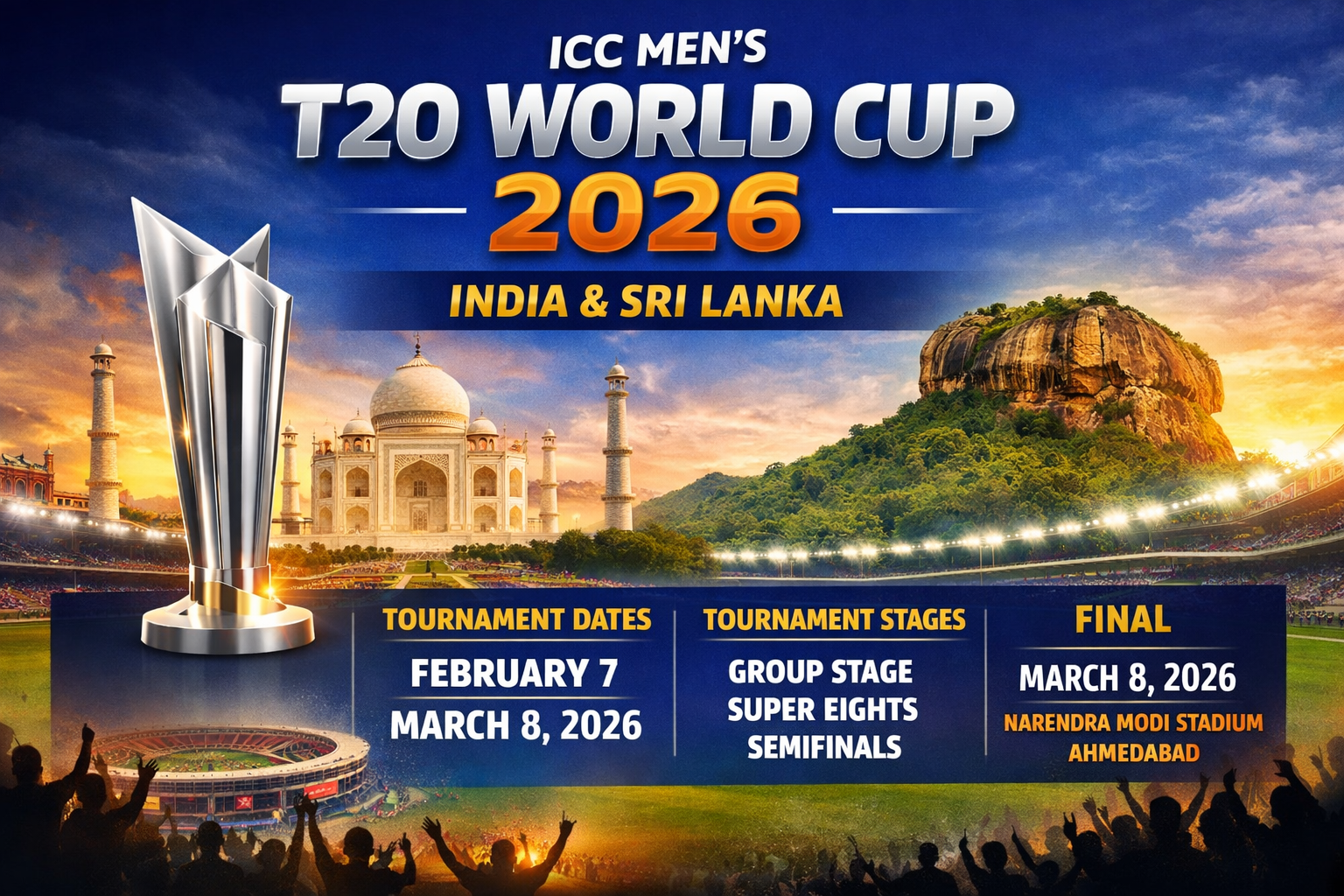
The ICC Men’s T20 World Cup 2026 schedule is drawing massive attention from cricket fans across the globe. With India and Sri Lanka hosting the tournament, this edition promises packed stadiums, high-pressure games, and a calendar filled with competitive fixtures.
Running from February 7 to March 8, 2026, the tournament features 20 international teams competing across more than a month of fast-paced cricket. The structure, timing, and venue distribution reflect years of experience in organizing major global tournaments, aiming to balance performance, recovery, and fan engagement.
For supporters planning to watch live, travel, or follow from home, understanding the schedule early makes a real difference.
Overview of the ICC Men’s T20 World Cup 2026 Format
The tournament follows a multi-stage format designed to reward consistency while keeping the excitement high.
All 20 teams begin in the group stage. From there, successful sides move into the Super Eight phase before entering the knockout rounds.
This structure ensures that teams must perform well over several matches rather than relying on one good day.
Tournament Stages
The competition is divided into four main phases:
- Group Stage
- Super Eights
- Semifinals
- Final
Each phase gradually increases pressure, intensity, and audience interest.
By the time teams reach the semifinals, they have already played in different conditions, venues, and crowd environments.
Group Stage Schedule and Structure
The group stage begins on February 7, 2026, and continues until around February 20. During this period, teams are divided into five groups of four.
Each team plays three group matches. Points are awarded for wins, and the top teams from each group advance.
Why the Group Stage Matters
Early matches often decide momentum. A strong start builds confidence, while early losses put pressure on teams.
Because T20 cricket is unpredictable, even strong teams cannot afford to relax in this phase.
A single poor performance can affect qualification.
Match Timings and Daily Fixtures
Most days feature two or three matches:
- Afternoon games
- Evening prime-time matches
- Occasional late-night fixtures for global audiences
This scheduling helps broadcasters reach fans in different time zones while maintaining steady tournament flow.
Major Venues for the 2026 Tournament
Matches will be played across leading stadiums in India and Sri Lanka. These venues were selected based on capacity, facilities, and historical importance.
Key Indian Venues
Some of the major stadiums include:
- Narendra Modi Stadium, Ahmedabad
- Wankhede Stadium, Mumbai
- Eden Gardens, Kolkata
- MA Chidambaram Stadium, Chennai
- Arun Jaitley Stadium, Delhi
These grounds are known for passionate crowds and strong cricketing traditions.
Sri Lankan Venues
Sri Lanka will host several important fixtures, mainly in:
- Colombo
- Pallekele
- Kandy region
These venues offer different pitch conditions, adding variety to the tournament.
High-Profile Group Matches to Watch
Certain matches always attract global attention due to history, rivalry, and fan base.
India vs Pakistan
This fixture remains one of the most-watched sporting events worldwide. It is scheduled in prime time and placed strategically in the group stage to maximize viewership.
The pressure, atmosphere, and expectations make this match unique in world cricket.
Traditional Rivalries
Other major matchups include:
- England vs Australia
- West Indies vs England
- India vs New Zealand
- Pakistan vs Sri Lanka
These contests often influence group rankings and tournament narratives.
Super Eights Phase: Where the Real Test Begins
After the group stage, the tournament enters the Super Eights phase around February 21.
Eight qualified teams are divided into two groups of four. Each team plays three matches.
Only the top two teams from each group reach the semifinals.
Why Super Eights Are Crucial
At this stage:
- Weak teams are eliminated
- Only consistent performers remain
- Tactical planning becomes more important
- Squad depth is tested
Teams cannot rely on individual brilliance alone. Strategy, fitness, and adaptability matter more.
Knockout Rounds and Final Match
The knockout stage begins in early March.
Semifinals
The two semifinals are scheduled around March 4 and March 5.
Each semifinal is a do-or-die contest. One mistake, one dropped catch, or one poor over can end a team’s campaign.
Final: March 8, 2026
The final will be played on March 8, 2026, at the Narendra Modi Stadium in Ahmedabad.
With its massive seating capacity, the venue is expected to host one of the largest crowds in T20 World Cup history.
The final represents the peak of the tournament — weeks of preparation, travel, and pressure lead to one decisive match.
Understanding the Schedule in Practical Terms
Looking at the ICC Men’s T20 World Cup 2026 schedule from a practical angle reveals careful planning.
Travel and Recovery
Teams travel frequently between cities and countries. The schedule includes rest days to reduce fatigue, especially for fast bowlers and all-rounders.
Without proper recovery, performance drops quickly in T20 cricket.
Weather and Conditions
February and March offer relatively stable weather in most host cities. This reduces the risk of rain interruptions and abandoned matches.
Different regions also provide varied pitch behavior, testing batting and bowling techniques.
Broadcast Strategy
High-profile matches are usually placed in evening slots. This helps maximize television audiences in Asia, Europe, and Australia.
Less popular fixtures are often scheduled earlier in the day.
Ticketing and Match Attendance Planning
Fans planning to attend matches should consider:
- Booking tickets early for popular games
- Checking city-wise schedules
- Planning travel and accommodation in advance
- Monitoring possible venue changes
High-demand matches often sell out within days of release.
Possible Schedule Adjustments
While the ICC releases an official schedule, minor changes can happen.
These may occur due to:
- Weather conditions
- Security arrangements
- Team progression
- Broadcasting requirements
Major changes are rare, but fans should stay updated through official channels.
What Makes the 2026 Schedule Different
Compared to earlier editions, the 2026 schedule shows greater balance.
There is:
- Better spacing between major matches
- Reduced back-to-back travel
- Improved rest periods
- Clear separation between phases
This reflects the growing professionalism in tournament management.
Impact on Teams and Players
The schedule directly affects how teams prepare.
Coaches plan training sessions around travel days. Captains manage player workloads carefully. Medical staff monitor recovery closely.
In a long tournament, staying physically and mentally fresh becomes a competitive advantage.
Frequently Asked Questions
When does the ICC Men’s T20 World Cup 2026 start and end?
The tournament begins on February 7, 2026, and ends with the final on March 8, 2026, lasting just over one month.
How many teams are playing in the tournament?
A total of 20 international teams are participating, making it one of the largest T20 World Cups so far.
Where will the final be played?
The final is scheduled at the Narendra Modi Stadium in Ahmedabad, India.
How many matches are there in total?
There are 55 matches, including group games, Super Eight fixtures, semifinals, and the final.
Can the schedule change later?
Minor adjustments are possible due to weather, security, or logistical reasons, but major changes are uncommon.
Where can fans find official updates?
Fans should follow official ICC platforms and trusted sports news sources for confirmed updates and announcements.