Bad Bunny’s Super Bowl Halftime Performance Showcases Love and Latino Pride — and Sparks Trump’s Scorn
 MUBASHIR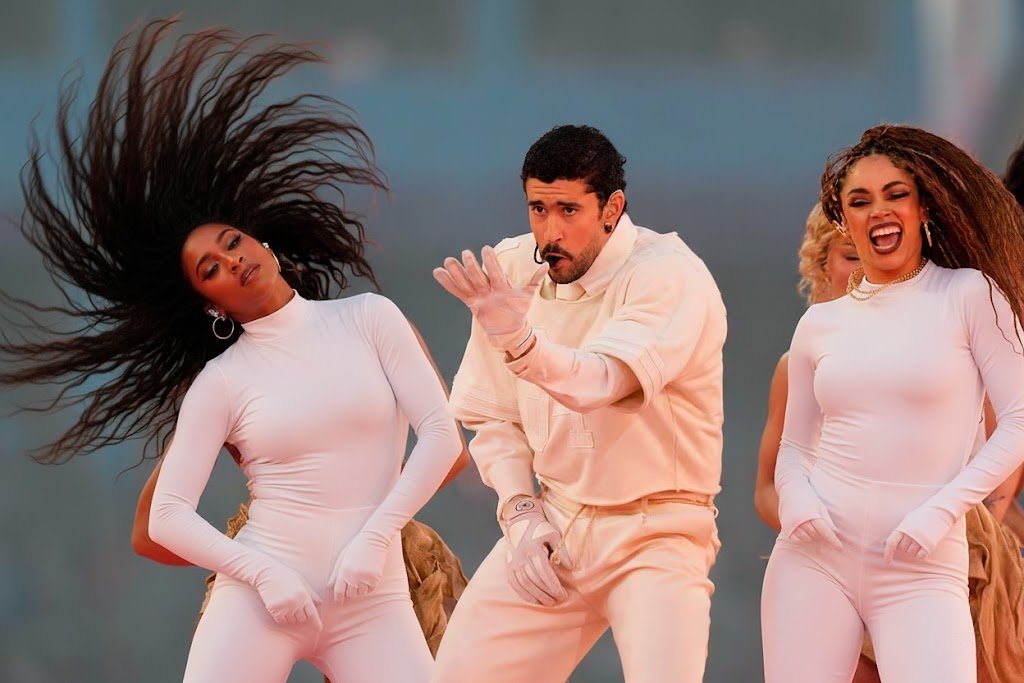
Bad Bunny’s Super Bowl halftime performance showcases love and Latino pride — and sparks Trump’s scorn in a way that feels almost inevitable in today’s cultural climate. The moment itself was loud, joyful, and unapologetically rooted in identity. The reaction that followed was just as telling, revealing how a pop performance can quickly turn into a cultural and political Rorschach test.
The Super Bowl halftime show has long been more than entertainment. It’s one of the few moments when music, identity, and mass attention collide on equal footing. When Bad Bunny stepped into that space, the conversation expanded beyond choreography and setlists into questions of visibility, belonging, and who gets to define “American” culture on its biggest stage.
A Halftime Show Built on Visibility, Not Spectacle Alone
Bad Bunny’s performance didn’t rely on shock value or forced controversy. Instead, it leaned into something simpler and arguably more powerful: representation that felt lived-in rather than symbolic.
Spanish-language lyrics were front and center. Caribbean rhythms weren’t diluted for a mainstream audience. Dancers, visuals, and styling reflected Latino street culture without explanation or apology. For many viewers, especially Latino fans, the impact came from how normal it all felt.
This mattered because halftime shows have often framed diversity as a special feature rather than a baseline. Bad Bunny flipped that dynamic. He didn’t pause to translate himself for the audience. He assumed they could keep up—or learn.
Why Language Choice Was the Point
Performing primarily in Spanish on a stage watched by over 100 million people isn’t a neutral decision. It quietly challenges the idea that English is the default language of American pop culture.
For Latino viewers, it signaled recognition. For others, it was an invitation into a culture that has always existed alongside the mainstream, even when ignored by it. The lack of compromise was the message.
Love as a Throughline, Not a Talking Point
The emotional tone of the performance leaned toward joy rather than defiance. Songs centered on connection, community, and everyday life. There was no overt political speech, no pointed monologue.
And yet, that emphasis on love—romantic, cultural, communal—read as political to some viewers precisely because it came from a Latino artist owning the spotlight without restraint.
Latino Pride on America’s Biggest Stage
Latino representation in Super Bowl halftime shows isn’t new, but it has often been framed as a crossover moment rather than a cultural one. Bad Bunny’s approach felt different.
Rather than blending into a generic pop aesthetic, the performance leaned deeper into Puerto Rican and broader Latin American influences. The result wasn’t niche; it was expansive.
Context Matters Here
Latinos make up nearly one in five people in the United States. Spanish is the country’s second most spoken language. Yet moments of full cultural visibility at marquee events remain surprisingly rare.
That’s why this halftime show resonated beyond fandom. It reflected a demographic reality that American media still struggles to treat as central rather than supplementary.
Cultural Confidence, Not Assimilation
One reason the performance landed strongly is that it didn’t seek validation. There was no sense of proving Latino music’s worth or relevance.
Bad Bunny performed as if his place on that stage was already settled. That confidence shifted the power dynamic. Instead of asking to be included, he acted as someone who already belonged.
Why Trump’s Reaction Was Predictable
Donald Trump’s scornful response to the performance followed a familiar pattern. When cultural moments emphasize diversity without softening it for comfort, they often draw criticism from figures who frame such visibility as exclusionary.
Trump’s comments, shared publicly, framed the performance as divisive rather than celebratory. The criticism wasn’t about musical quality or execution. It focused on identity.
Culture Wars Thrive on High-Visibility Moments
The Super Bowl is uniquely positioned to amplify cultural tension. It’s one of the few shared experiences left in a fragmented media landscape.
When an artist like Bad Bunny uses that platform to center Latino identity, it becomes easy fodder for culture-war framing. Supporters see inclusion. Critics frame it as politics invading entertainment.
Why This Isn’t Really About Music
Trump’s scorn wasn’t rooted in tempo, vocals, or stagecraft. It reflected discomfort with a shifting cultural center of gravity.
As Latino artists dominate streaming charts and global tours, the idea of American pop culture as monolithic becomes harder to defend. For some, that change feels threatening rather than celebratory.
The Public Reaction: A Split That Says More Than the Show
Public response to the performance mirrored broader cultural divides. Social media praise focused on authenticity, joy, and representation. Criticism often framed the moment as exclusionary or “too political.”
What stood out was how little middle ground existed. People either recognized themselves in the performance or felt alienated by it.
Representation Isn’t Neutral to Everyone
For communities long underrepresented, visibility feels affirming. For those used to seeing themselves reflected everywhere, it can feel like displacement—even when nothing is taken away.
That tension explains why a performance rooted in love and pride could spark backlash without making a single explicit political statement.
Younger Audiences Saw It Differently
Younger viewers, particularly Gen Z and millennials, largely viewed the performance as overdue rather than provocative. For them, multiculturalism isn’t an ideology. It’s the reality they grew up in.
This generational divide hints at where future halftime shows—and broader cultural norms—are heading.
What This Means for the Super Bowl Halftime Show Going Forward
Bad Bunny’s Super Bowl halftime performance may end up remembered less for its setlist and more for what it normalized.
It suggested that artists don’t need to dilute their cultural identity to command the biggest stage. That visibility doesn’t require translation. That love and pride can be expressed without justification.
A Shift in Gatekeeping
The NFL’s choice to spotlight artists who reflect America’s diversity signals a slow shift in who gets to define “mass appeal.”
This doesn’t mean every future show will look the same. It does mean the range of what’s considered mainstream is expanding.
Controversy as a Byproduct, Not a Goal
Importantly, the performance didn’t chase outrage. The controversy followed it.
That distinction matters. It suggests cultural tension isn’t always manufactured—it often emerges when long-standing norms are quietly challenged.
Beyond Trump: Why the Moment Still Matters
Focusing too much on Trump’s reaction risks missing the larger point. The lasting impact of the performance lies in how many people felt seen without being singled out.
It showed that representation can exist without explanation. That pride doesn’t need permission. And that love, expressed openly, can still unsettle those invested in narrower definitions of culture.
Bad Bunny didn’t use the halftime show to argue. He used it to exist—fully, visibly, and on his own terms. The reaction, both supportive and critical, revealed just how powerful that simple act can be.
Frequently Asked Questions
Why did Bad Bunny’s halftime performance spark controversy?
The performance centered Latino culture and Spanish-language music without compromise. For some viewers, that visibility felt celebratory; for others, it challenged their expectations of what belongs on a mainstream stage.
What exactly did Trump criticize about the performance?
Trump’s comments focused on identity and cultural messaging rather than musical execution, framing the performance as divisive rather than inclusive.
Was the performance meant to be political?
There were no explicit political statements. The reaction stemmed from cultural representation itself, which often becomes politicized regardless of intent.
Why was performing in Spanish significant?
Spanish is widely spoken in the U.S., yet rarely centered at events like the Super Bowl. Using it prominently challenged long-standing assumptions about language and mainstream culture.
How did Latino audiences respond?
Many Latino viewers described the performance as affirming and overdue, praising its authenticity and refusal to dilute cultural expression.
Will this change future Super Bowl halftime shows?
It suggests a broader acceptance of diverse cultural expressions on major stages, though reactions show that such shifts will continue to spark debate.