
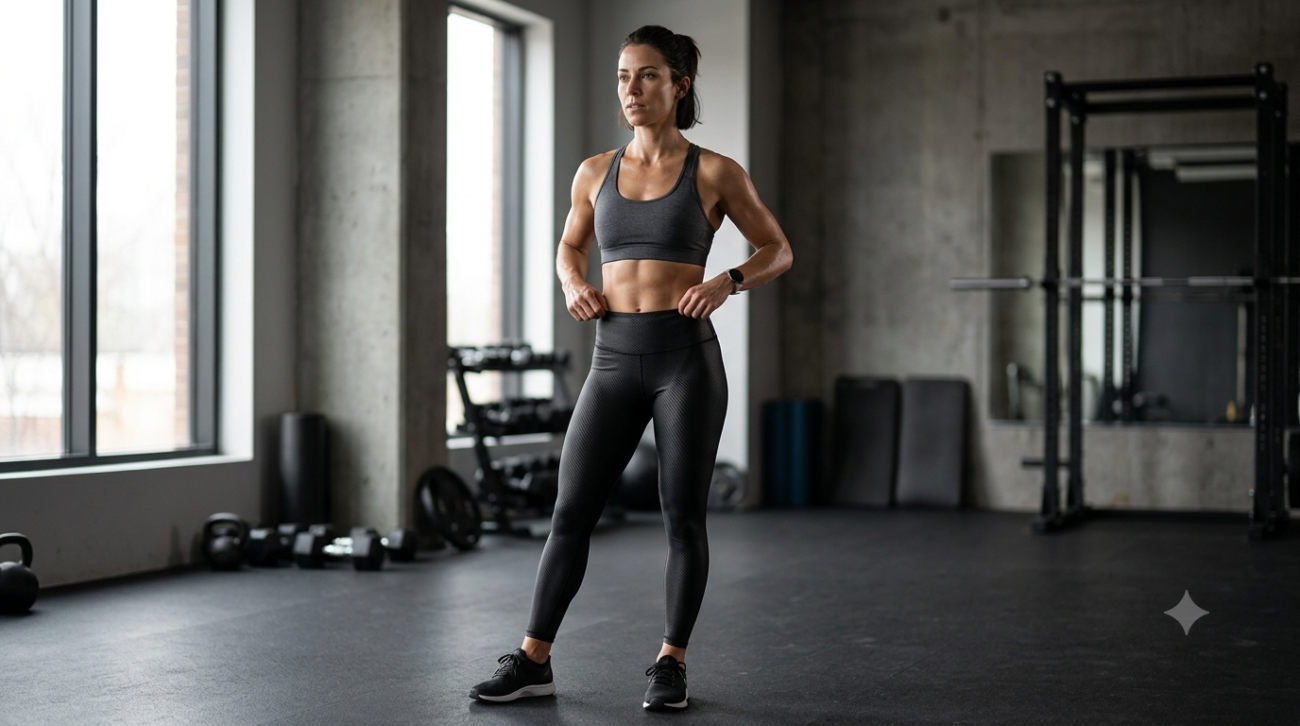
Women’s carbon fiber sports leggings have become an interesting category within performance activewear, combining the sleek appearance associated with carbon fiber with the flexibility expected from modern athletic leggings. However, the term can mean different things depending on the product. Some leggings genuinely incorporate carbon-based fibers or treatments, while others use a carbon-fiber-inspired print over a conventional polyester-and-spandex fabric.
That distinction is important when choosing a pair. Carbon fiber itself is a specialized technical material, while most leggings need softness, stretch, breathability, and recovery to remain comfortable against the body. Research into carbon-containing textiles shows that carbon fibers can provide useful electrical and functional properties, but incorporating them into flexible clothing requires careful textile engineering.
For everyday shoppers, therefore, the best carbon fiber leggings are not necessarily the ones with the most technical-sounding description. Fabric composition, construction, fit, transparency, waistband design, and intended use usually have a much greater effect on the wearing experience.
What Are Women’s Carbon Fiber Sports Leggings?
Women’s carbon fiber sports leggings are close-fitting athletic leggings marketed around carbon-fiber materials, carbon-based textile technology, or a carbon-fiber-style appearance.
The phrase does not have one universal technical definition. A pair may contain actual carbon-based material, use carbon-containing coatings or fibers, or simply feature a printed pattern that resembles the woven surface of carbon fiber.
This difference is particularly important because genuine carbon fiber is quite different from the soft knitted fabrics normally used for sportswear. Carbon fibers are valued in technical applications for properties such as strength-to-weight performance and electrical conductivity, but pure carbon-fiber textile structures can be stiff or brittle compared with ordinary apparel fibers.
Consequently, a wearable pair of leggings is more likely to use carbon-related material as part of a textile system rather than being made entirely from conventional structural carbon fiber.
Why Is Carbon Fiber Used in Textiles?
Carbon materials have several characteristics that make them interesting for technical textiles.
One important property is electrical conductivity. Ordinary textile fibers are generally electrical insulators, particularly under dry conditions, whereas carbon-based conductive components can help provide pathways for electrical charge. Research on bicomponent carbon fibers has demonstrated that increasing the proportion and surface presence of carbon fiber can lower electrostatic resistance in certain woven fabrics.
Carbon-based materials are also being investigated for smart textiles and wearable electronics. Researchers have explored carbon fibers, carbon nanotubes, graphene, and carbon black for electrically functional fabrics.
That does not mean a normal pair of carbon fiber sports leggings functions as electronic clothing. It simply explains why carbon-based materials appear in specialized textile research.
For ordinary activewear, the more noticeable characteristics will usually come from the rest of the fabric construction.
Background and Development of Performance Leggings
Modern sports leggings evolved from the broader development of stretch athletic clothing.
Traditional athletic trousers were often made from cotton or heavier woven fabrics. These materials could be comfortable, but they were not always ideal for high-intensity movement because they absorbed moisture and could become heavy.
The introduction of synthetic fibers such as polyester and nylon changed sportswear considerably. When combined with elastane, these fibers can create fabrics that stretch with the body while recovering their original shape.
This development eventually produced the familiar four-way-stretch leggings used for running, gym training, yoga, Pilates, dance, cycling, and casual wear.
Technical textile research then introduced additional possibilities. Conductive fibers, carbon materials, sensors, coatings, and other functional components can be incorporated into textile structures for applications ranging from antistatic clothing to wearable electronics.
At the consumer level, however, “carbon fiber” has also become a visual design language. The distinctive woven pattern is associated with racing, cycling, automotive engineering, and high-performance equipment. As a result, some leggings use the appearance without necessarily incorporating genuine carbon fiber.
How Do Carbon Fiber Sports Leggings Work?
The leggings themselves work in much the same way as other performance leggings: the fabric stretches as the wearer moves, the waistband helps hold the garment in place, and the textile manages moisture and heat according to its construction.
If carbon-based fibers are actually incorporated into the garment, they may provide a specific functional characteristic. For example, conductive carbon fibers can influence the electrical resistance of a fabric and help manage static charge. Studies have found that carbon-fiber concentration, orientation, and distribution can affect these properties.
However, this is different from saying that carbon fiber automatically makes leggings stronger, more comfortable, or better for exercise.
The performance of an actual garment depends on the entire textile system.
A high-quality pair might use polyester or nylon for durability, elastane for stretch, specialized yarns for comfort, and carbon-containing material for a particular technical function. The balance between these components determines how the finished leggings behave.
Carbon Fiber Material vs. Carbon Fiber Print
This is one of the easiest points to misunderstand.
A carbon-fiber print is a decorative graphic. It creates the recognizable dark woven appearance but does not automatically provide the physical properties of carbon fiber.
Actual carbon-containing textiles are different because the carbon material is part of the textile structure or treatment.
A product listing should therefore be checked for a complete fiber-content statement. If the description says only “carbon fiber design,” “carbon look,” or “carbon print,” it may be describing appearance rather than material composition.
Key Fabric Features to Examine
Four-Way Stretch
Four-way stretch allows fabric to extend both vertically and horizontally.
This is useful for movements such as squats, lunges, stretching, climbing, running, and yoga because the fabric can follow the body’s movement rather than pulling tightly in one direction.
Stretch recovery is equally important. A fabric that stretches easily but does not recover well may become loose around the knees, hips, or seat after repeated use.
Polyester and Spandex Blends
Many performance leggings use polyester or nylon combined with elastane.
Polyester can contribute durability and moisture-management characteristics, while elastane provides stretch. The exact percentages matter because a fabric with more elastane may feel different from one with a heavier synthetic-fiber content.
One commercially available product marketed specifically as women’s carbon fiber sports leggings, for example, lists an 82% polyester and 18% spandex blend and describes four-way stretch, moisture management, breathability, and a medium-hold waistband.
That example also illustrates why buyers should read the specifications rather than assuming the product is made primarily from structural carbon fiber.
Moisture Management
Moisture-wicking fabric is designed to move perspiration away from the skin and help it evaporate.
This can make a noticeable difference during running, gym workouts, or other activities that produce substantial sweat.
However, “moisture-wicking” is not a single standardized level of performance. Fabric weight, construction, humidity, temperature, activity intensity, and fit all affect how quickly a garment feels dry.
Breathability
Breathability determines how comfortable leggings feel during prolonged activity.
A thick, tightly knitted fabric may provide excellent coverage but can feel warmer. A lighter fabric may be more comfortable in hot weather but may offer a different level of support and opacity.
There is no universally best fabric thickness. The appropriate choice depends on the climate and activity.
Opacity and Squat Performance
Opacity is especially important in women’s workout leggings.
A fabric can appear opaque while standing but become more transparent when stretched during a squat or forward bend.
For gym users, reviews mentioning transparency during squats can be more informative than photographs. A well-constructed pair should maintain adequate coverage across the range of movement for which it was designed.
Waistband Construction
The waistband is one of the most important comfort features.
A wide waistband can distribute pressure across a larger area and help prevent the garment from sliding down during exercise.
A high-rise waistband may also provide more coverage around the midsection, while a lower-rise design may feel less restrictive.
The ideal choice depends on personal preference and the activity.
Compression and Support
Compression is often associated with performance leggings, but not every tight-fitting legging provides medical or athletic compression.
A pair may simply use elastic fabric to create a close fit.
Light or moderate compression can make leggings feel secure during movement, while excessive tightness can become uncomfortable during long workouts.
Consumers should therefore distinguish between:
- Close fit: The fabric follows the body.
- Stretch support: The material resists excessive movement without feeling rigid.
- Compression: The garment intentionally applies pressure through its construction.
These are related but not identical characteristics.
Advantages of Women’s Carbon Fiber Sports Leggings
Flexible Movement
Stretch fabrics allow the wearer to perform movements involving the hips, knees, and ankles without the restrictions of ordinary woven trousers.
Distinctive Appearance
Carbon-fiber patterns create a technical, sporty appearance that works particularly well with plain athletic tops and jackets.
Potential Technical Benefits
Where genuine carbon-based fibers are used, they may provide functional textile properties such as electrical conductivity or antistatic behavior. Research confirms that carbon fiber can influence the electrical characteristics of textile structures.
Versatility
A well-designed pair can work for several activities, including gym training, running, walking, yoga, Pilates, dance, and casual athleisure.
Easy Layering
Leggings can be worn alone during moderate conditions or underneath looser trousers when additional warmth is needed.
Limitations and Potential Drawbacks
The biggest limitation is the ambiguity surrounding the term “carbon fiber.”
A shopper may see a product described as carbon fiber and assume it contains a substantial quantity of genuine carbon fiber. That may not be the case.
Pure carbon fiber is not naturally comparable to soft, stretchy apparel fabric. Research notes that carbon fibers can be stiff and brittle, which limits their direct use in conventional knitted clothing.
Another limitation is that carbon-related features may have little practical effect on ordinary exercise.
If the main goal is comfortable running or strength training, the quality of the stretch fabric, waistband, stitching, and moisture management may matter considerably more.
Price is another consideration. A technical-sounding name should not automatically justify a premium price.
Real-World Uses
Gym Training
For squats, deadlifts, lunges, resistance machines, and general strength training, leggings should stay secure without restricting movement.
Opacity and waistband stability are particularly important.
Running and Jogging
Runners typically benefit from lightweight fabric, moisture management, secure construction, and minimal chafing.
A pocket can also be useful for carrying a key or phone.
Yoga and Pilates
Yoga and Pilates require substantial flexibility.
Soft fabric, four-way stretch, and comfortable seams can be more important than specialized carbon-related features.
Cycling and Outdoor Sports
Carbon-style leggings may appeal to cyclists and outdoor athletes because of their technical appearance.
However, dedicated cycling clothing can include specialized padding and construction that ordinary leggings do not provide.
MMA, BJJ, and High-Movement Sports
Close-fitting leggings can be useful in activities where loose fabric might interfere with movement.
For grappling sports, durability and seam strength deserve particular attention because the fabric experiences repeated stretching and friction.
Everyday Athleisure
A sleek pair of sports leggings can also work with casual clothing.
This is one reason performance leggings have moved beyond the gym and become common everyday garments.
Are Carbon Fiber Sports Leggings Safe?
For ordinary clothing use, the important considerations are the actual materials, manufacturing quality, fit, and care instructions.
The presence of carbon-based material does not automatically make a garment unsafe. Carbon-containing textile structures have been researched for protective clothing and wearable applications.
However, consumers should be cautious about unsupported health claims.
A pair of leggings should not be assumed to treat a medical condition, improve circulation, remove pain, burn additional fat, or produce major athletic improvements simply because the product description mentions carbon fiber.
If a garment causes persistent irritation, excessive pressure, numbness, or discomfort, it should not be treated as something the wearer simply needs to “get used to.”
How to Choose the Right Size
Sizing is particularly important because leggings are designed to sit close to the body.
Start by measuring the waist and hips according to the manufacturer’s instructions.
If your measurements fall between two sizes, check the brand’s recommendations rather than automatically choosing the smaller size for a tighter appearance.
A legging that is too small can place excessive tension on the seams and fabric. It may also become more transparent when stretched.
A slightly roomier fit is not necessarily better either. Excess fabric can bunch around the knees and reduce the secure feeling expected from athletic leggings.
What to Check Before Buying Online
Before placing an order, look for:
- Full fabric composition — Check whether carbon fiber is actually listed.
- Size chart — Compare measurements rather than relying only on S, M, L, or XL.
- Rise — Decide whether high-rise, mid-rise, or another design suits you.
- Inseam — Important for taller and shorter wearers.
- Opacity — Look for reviews discussing stretching and squats.
- Waistband — Check whether it rolls, slides, or stays secure.
- Seams — Reviews can reveal problems with stitching.
- Care instructions — Synthetic stretch fabrics can require specific washing methods.
- Return policy — Especially important when buying clothing online.
- Actual product photographs — Compare them with the written description.
Carbon Fiber Leggings vs. Regular Sports Leggings
For most people, the choice is less complicated than it initially appears.
A quality conventional sports legging can already provide four-way stretch, moisture management, breathability, durability, and a comfortable fit.
Carbon-based textile technology becomes more relevant when the product is specifically engineered around a technical function, such as conductivity or antistatic performance.
Scientific research shows that carbon-based materials can give textiles useful electrical properties, but those properties depend heavily on the amount, structure, distribution, and processing of the carbon material.
Therefore, carbon fiber should be viewed as one potential feature rather than a guarantee of superior athletic performance.
How to Care for Carbon Fiber Sports Leggings
The manufacturer’s care label should always take priority.
Stretch athletic fabrics generally benefit from being treated gently. Excessive heat can be particularly undesirable for garments containing elastic fibers.
Avoid treating high-quality leggings like ordinary heavy trousers. Rough washing, excessive heat, and repeated abrasion can affect elasticity, printed designs, and surface texture.
If the leggings have a decorative carbon-fiber print, aggressive washing or high heat may also gradually affect the visual finish.
Allow the garment to dry according to its care instructions, and avoid unnecessary high-temperature treatment.
Common Mistakes Buyers Make
Assuming Carbon Fiber Means the Entire Garment Is Carbon Fiber
This is probably the most common misunderstanding.
Most soft sports leggings need flexible textile fibers. A carbon-fiber visual design and a carbon-containing technical textile are not the same thing.
Buying Only for Appearance
The carbon pattern may look impressive, but appearance cannot tell you whether the garment stretches well or stays opaque.
Ignoring the Waistband
A beautiful pair of leggings can become frustrating if the waistband rolls down every time you bend over.
Choosing a Smaller Size for Compression
Smaller does not always mean better support.
Excessive stretching can make fabric uncomfortable and may reduce opacity.
Ignoring the Climate
A thick pair of leggings may be excellent for cool weather but uncomfortable during hot outdoor workouts.
Frequently Asked Questions
What are women’s carbon fiber sports leggings?
They are athletic leggings marketed around carbon-fiber materials, carbon-based textile technology, or a carbon-fiber-inspired design. The exact construction varies, so the material label should be checked before buying.
Do women’s carbon fiber leggings contain real carbon fiber?
Some may contain carbon-based fibers or treatments, but others simply use a carbon-fiber print. A product’s complete fiber-content specification is the best way to determine what it actually contains.
Are carbon fiber leggings good for workouts?
They can be, provided they have suitable stretch, breathability, opacity, waistband stability, and construction. Carbon fiber alone does not determine whether a pair is good for exercise.
Can I wear carbon fiber sports leggings for running?
Yes, if the design is lightweight, comfortable, secure, and suitable for the weather. For running, moisture management, chafing resistance, and waistband stability are generally more important than the carbon-fiber appearance.
Are carbon fiber leggings suitable for hot weather?
It depends on the fabric. Lightweight and breathable constructions are generally more comfortable in hot conditions, while thicker or highly compressive leggings can retain more heat.
How do I know if carbon fiber leggings are high quality?
Check the fabric composition, stitching, stretch recovery, waistband construction, opacity, sizing information, care instructions, and independent customer feedback. A technical name by itself is not a reliable quality indicator.
Final Buying Perspective
Women’s carbon fiber sports leggings occupy an interesting space between performance apparel, technical textiles, and fashion. Genuine carbon-based textile materials have legitimate engineering applications, particularly where electrical or specialized functional properties are required. Research has demonstrated that carbon fibers can change the electrical and mechanical characteristics of textile structures.
But shoppers should separate those technical possibilities from marketing language.
For everyday exercise, the most important qualities remain practical ones: comfortable stretch, reliable recovery, good coverage, breathable construction, a stable waistband, durable seams, and an appropriate fit.
If a pair also offers genuine carbon-based textile technology, that can be an interesting additional feature. If it simply has a carbon-fiber-inspired pattern, it can still be attractive and functional sportswear—as long as the underlying fabric is well made.
The smartest purchase is therefore not necessarily the leggings with the most advanced-sounding name. It is the pair whose materials, construction, fit, and intended use make sense for the person wearing them.
