Dubai Crypto Traders in 2026: Why Anonymous Exchanges Are Gaining Popularity in the UAE
 MUBASHIR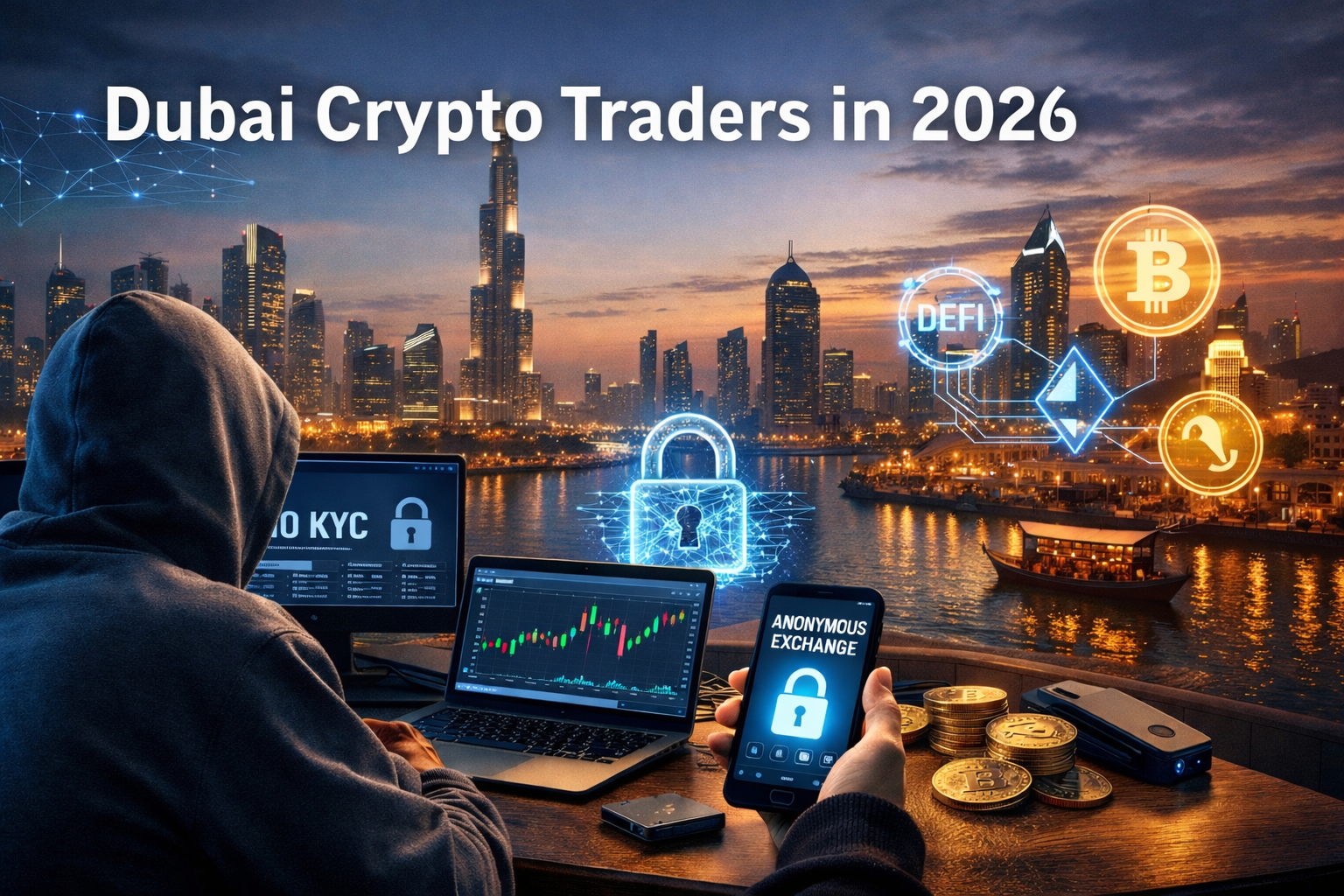
By 2026, Dubai has firmly established itself as one of the world’s most active digital asset hubs. From luxury towers hosting blockchain startups to co-working spaces filled with Web3 developers, crypto has become part of the city’s financial landscape.
Yet alongside regulated platforms and government-backed initiatives, another trend is quietly gaining momentum: the growing interest in anonymous exchanges.
For many Dubai crypto traders in 2026, privacy is no longer a niche concern. It is becoming a practical consideration shaped by regulation, personal security, and changing market behavior.
This shift is not about avoiding the system. It is about navigating it carefully.
Dubai’s Crypto Environment in 2026: Mature, Regulated, and Watched
Over the past few years, the UAE has built one of the most structured crypto regulatory frameworks in the region. Licensing bodies, compliance standards, and reporting obligations have become part of daily trading life.
By 2026, most major exchanges operating in Dubai require:
- Full identity verification
- Source-of-funds documentation
- Transaction monitoring
- Data sharing with regulators
For institutional investors and long-term holders, this environment offers stability and legal clarity. For active retail traders, however, it also brings constant oversight.
Every large transaction leaves a digital and regulatory footprint.
For some, that transparency feels reassuring. For others, it feels restrictive.
Why Privacy Has Become a Practical Concern
Privacy in crypto is often misunderstood. It is not always about secrecy. More often, it is about control.
In Dubai’s fast-paced financial environment, many traders operate multiple accounts, manage family wealth, or work in industries where financial exposure can create complications.
By 2026, traders are asking more practical questions:
- Who has access to my trading data?
- How long is it stored?
- Can it be shared internationally?
- What happens if databases are breached?
High-profile data leaks in traditional finance and crypto platforms alike have made people more cautious. Once personal information is online, it is almost impossible to retrieve.
Anonymous exchanges appeal to users who want to reduce that risk.
What Are Anonymous Crypto Exchanges?
Anonymous exchanges are platforms that allow users to trade digital assets with minimal or no identity verification.
Unlike fully regulated platforms, they often require:
- No passport upload
- No proof of address
- Limited personal data
- Wallet-based registration
In many cases, users connect directly through their crypto wallets and trade peer-to-peer or via automated liquidity pools.
Some platforms operate as decentralized exchanges (DEXs). Others are centralized but maintain privacy-focused policies.
By 2026, both models are popular among Dubai crypto traders seeking flexibility.
The Role of Decentralized Finance in This Shift
Decentralized finance has matured significantly by 2026. Early technical barriers have been replaced by cleaner interfaces and better customer support.
Today, a trader in Dubai can:
- Connect a wallet in seconds
- Swap assets without registration
- Access lending and staking services
- Move funds across chains
This frictionless experience is a major factor behind the rise of anonymous trading.
Instead of opening accounts and waiting days for approval, users can operate instantly.
For active traders who move quickly between assets, that speed matters.
Regulatory Pressure and Behavioral Response
Regulation changes behavior. This is true in every financial market.
As UAE authorities strengthened oversight, some traders adapted by:
- Reducing transaction sizes
- Spreading activity across platforms
- Using privacy-focused tools
- Exploring decentralized options
This is not unique to Dubai. Similar patterns appear in Europe, Asia, and North America.
When compliance becomes heavier, part of the market naturally looks for lighter alternatives.
Anonymous exchanges fill that gap.
Financial Privacy and Personal Safety
Dubai is a global city with high-net-worth residents, entrepreneurs, and international investors. Public knowledge of someone’s financial activity can sometimes create unwanted attention.
By 2026, crypto portfolios can be substantial. Large on-chain balances are visible. Exchange accounts can become targets.
Some traders prefer anonymity simply for safety.
They want to avoid:
- Being linked to large holdings
- Becoming targets for scams
- Receiving unsolicited offers
- Facing social pressure
Privacy becomes a form of personal security.
Limitations of Fully KYC-Based Platforms
KYC (Know Your Customer) is now standard across most centralized exchanges in the UAE. While it supports compliance, it also creates friction.
Common complaints include:
- Long verification times
- Account freezes
- Delayed withdrawals
- Sudden document requests
- Compliance reviews
For traders who rely on fast execution, these interruptions can be costly.
Anonymous exchanges reduce these bottlenecks.
Funds remain under the user’s control, and access is rarely suspended without technical reasons.
Trust Shifting From Institutions to Code
One noticeable change by 2026 is where traders place their trust.
Earlier generations trusted big brands and licensed platforms. Newer traders increasingly trust open-source protocols and smart contracts.
They review audits, follow developer updates, and monitor community feedback.
For them, transparent code feels safer than opaque corporate policies.
Anonymous exchanges, especially decentralized ones, benefit from this mindset.
They rely on systems rather than administrators.
Cross-Border Trading and Global Access
Dubai traders are rarely limited to local markets. Many operate internationally, interacting with Asian, European, and African liquidity pools.
Some regulated platforms restrict access based on jurisdiction, sanctions, or compliance agreements.
Anonymous exchanges tend to be borderless.
This global access appeals to traders who:
- Arbitrage between regions
- Participate in early-stage projects
- Access niche tokens
- Operate across time zones
By 2026, this flexibility is a competitive advantage.
The Influence of Younger Traders
Younger crypto users in the UAE have grown up with digital privacy debates, social media data scandals, and surveillance concerns.
They are more skeptical of centralized data storage.
For many under 30 traders, anonymity is not suspicious. It is normal.
They are comfortable managing wallets, backups, and security practices. They see self-custody as responsibility, not inconvenience.
Their preferences are shaping market trends.
Risks and Trade-Offs of Anonymous Exchanges
Anonymous trading is not without downsides. Experienced traders understand this.
Key risks include:
- Limited customer support
- Higher scam exposure
- No legal protection
- Smart contract vulnerabilities
- Liquidity fluctuations
If something goes wrong, recovery options are limited.
This is why many Dubai traders adopt a hybrid approach: regulated platforms for long-term holdings, anonymous exchanges for active trading.
It is a balance between security and autonomy.
How Traders Evaluate Anonymous Platforms in 2026
Experienced users rarely choose platforms casually. They examine several factors:
Technical Reliability
Is the platform stable under high volume? Has it survived major market swings?
Security History
Has it experienced hacks? How were incidents handled?
Transparency
Are audits public? Are developers known in the community?
Liquidity
Can large orders be executed without heavy slippage?
Community Reputation
What are long-term users saying, not just influencers?
These criteria separate serious platforms from short-lived experiments.
Cultural Attitudes Toward Financial Independence
In Dubai, entrepreneurship and independent wealth management are widely respected. Crypto fits naturally into this culture.
By 2026, many residents manage side businesses, investments, and online ventures.
Anonymous exchanges support this independent mindset.
They allow users to operate without relying on institutional permission.
For some, that autonomy is philosophical as much as practical.
Government Innovation and Parallel Systems
Interestingly, the rise of anonymous exchanges does not contradict Dubai’s crypto ambitions.
The UAE continues to support blockchain adoption, tokenized assets, and regulated innovation.
What is happening is the emergence of parallel systems.
One is formal, compliant, and institution-friendly.
The other is flexible, user-driven, and privacy-focused.
Both coexist.
Most traders move between them depending on their needs.
The Future Outlook: Integration, Not Replacement
By 2026, it is clear that anonymous exchanges are not replacing regulated platforms. They are complementing them.
Traders use different tools for different purposes:
- Savings and large holdings → regulated platforms
- Active trading → anonymous exchanges
- Experiments and early projects → decentralized platforms
This layered approach reflects maturity.
Crypto users are no longer ideological. They are pragmatic.
FAQs: Dubai Crypto Traders and Anonymous Exchanges
Are anonymous exchanges legal in the UAE in 2026?
The legality depends on how the platform operates and how users report their activities. Trading itself is not illegal, but tax and compliance obligations may still apply.
Can I stay completely anonymous while trading crypto in Dubai?
Complete anonymity is difficult to guarantee. Blockchain transactions are public, and off-chain activities may still create data trails.
Are anonymous exchanges safe for beginners?
They can be risky for beginners due to limited support and higher scam exposure. New traders often benefit from learning on regulated platforms first.
Why do some traders prefer anonymous exchanges over licensed ones?
Common reasons include privacy, faster access, fewer restrictions, and greater control over funds.
Do anonymous exchanges charge higher fees?
Not always. Some have competitive fees, but network costs and liquidity conditions can affect total trading expenses.
Can I use both regulated and anonymous exchanges together?
Yes. Many experienced traders combine both, using each for specific purposes.
By 2026, Dubai’s crypto market reflects the city itself: sophisticated, diverse, and adaptive. The growing interest in anonymous exchanges is not a rejection of regulation. It is a response to complexity. As traders gain experience, they look for tools that match their pace, priorities, and privacy expectations. In that context, anonymous platforms are not a trend. They are part of a maturing ecosystem—one where choice matters as much as compliance.