
India vs Pakistan, 27th Match, Group A, ICC Men’s T20 World Cup 2026: India Won by 61 Runs
 MUBASHIR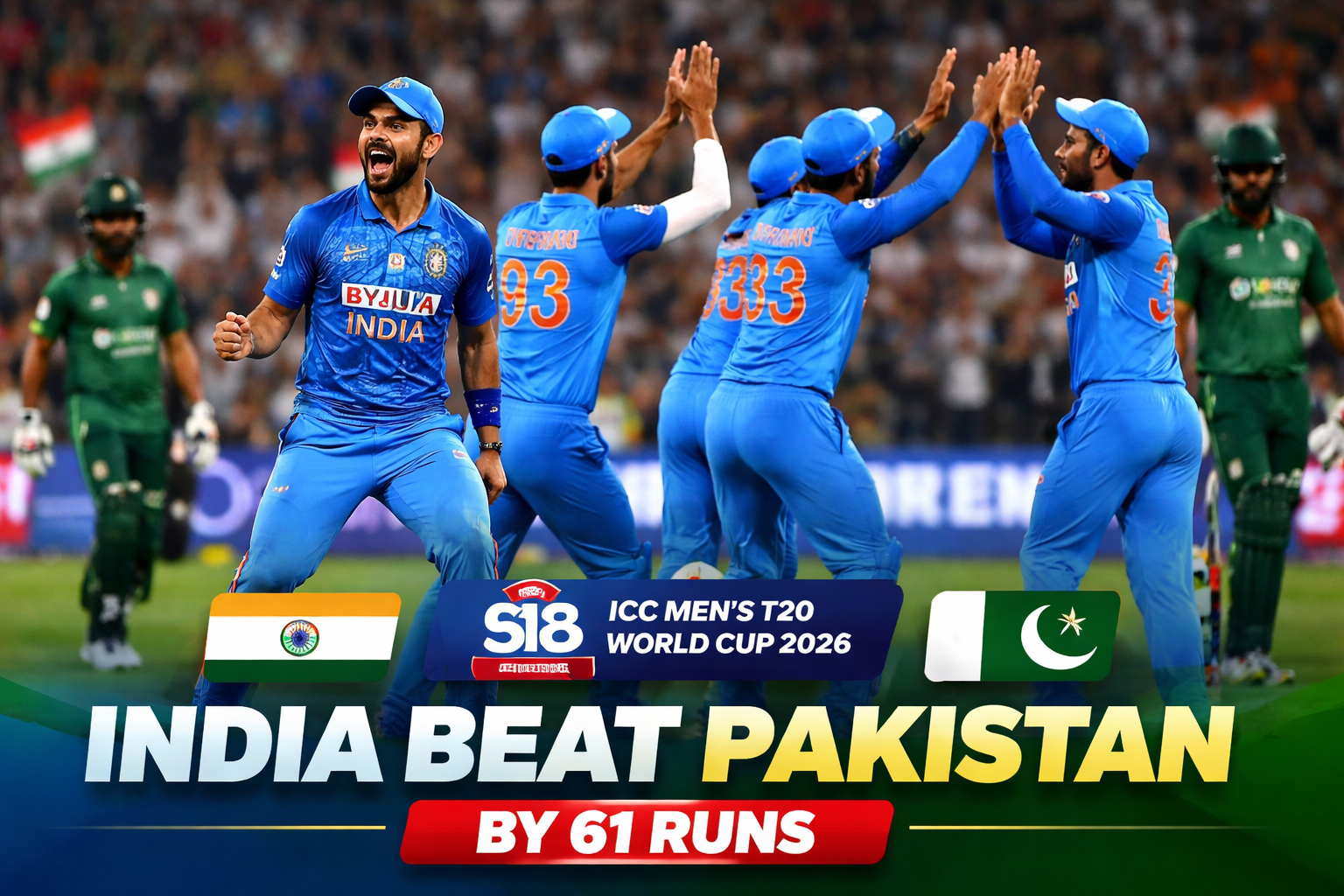
Few sporting rivalries carry the emotional weight of India vs Pakistan. When the two sides met in the 27th Match of Group A at the ICC Men’s T20 World Cup 2026, it wasn’t just another group-stage fixture. It was a night shaped by pressure, history, and a performance that tilted heavily in India’s favor, ending in a commanding 61-run victory.
Matches between India and Pakistan rarely follow predictable scripts. Momentum swings fast, and the psychological layer is often as important as skill. This encounter, however, unfolded with unusual clarity. India built control early, tightened it in the middle overs, and never allowed Pakistan a genuine route back.
The Build-Up: More Than a Group A Fixture
Even in a packed tournament schedule, this match stood apart. Tickets vanished quickly, broadcasts drew massive global audiences, and every small tactical decision was dissected before a ball was bowled.
Both teams arrived with contrasting momentum. India looked settled, with a batting order that blended aggression and composure. Pakistan, meanwhile, had shown flashes of brilliance but also moments of inconsistency. In high-pressure tournaments, that balance often decides outcomes more than raw talent.
The pitch report suggested a batting-friendly surface with some assistance for spinners later. That forecast quietly shaped the match. The side that batted first had an opportunity to dictate terms, especially if they crossed the 170-run mark — often a psychological threshold in T20 cricket.
India’s Batting: A Calculated Assault
Winning the toss and choosing to bat, India didn’t rush blindly. The opening overs were assertive but measured. Instead of chasing early fireworks, the top order focused on strike rotation, forcing Pakistan’s bowlers to adjust their lengths.
The powerplay ended with India ahead of the expected curve, but not recklessly so. What stood out was the absence of panic. Dot balls were minimized, singles were stolen, and boundary balls were chosen carefully rather than chased.
Middle Overs Mastery
The middle overs often decide T20 matches, especially on balanced pitches. India’s approach here was clinical. Rather than allowing Pakistan’s spinners to settle, the batters used their feet, disrupted lines, and kept the scoreboard moving.
This phase didn’t feature a constant stream of sixes. Instead, it was built on intelligent placement and running between the wickets. Pakistan’s fielders were forced into long chases, and the pressure slowly accumulated.
By the 15th over, India had built a platform that made a total above par almost inevitable.
The Death Overs Surge
The final overs delivered the knockout punch. With wickets in hand, India’s hitters expanded their range. Yorkers were squeezed into boundaries, slower balls were read early, and even good deliveries disappeared over the rope.
The closing burst pushed the total well beyond what Pakistan would have preferred to chase. It wasn’t just about runs; it was about scoreboard pressure. In T20 cricket, chasing a steep target against a confident bowling unit demands near-perfection.
Pakistan’s Chase: Pressure From the First Over
Pakistan’s reply began with intent but quickly ran into disciplined bowling. India’s pace attack didn’t offer width, forcing batters to manufacture shots. Early wickets disrupted rhythm and prevented partnerships from forming.
A chase of this magnitude requires at least one long, stable stand. Pakistan never found it. Every time a batter looked set, a breakthrough followed.
Spin Tightens the Grip
As predicted, the pitch began assisting slower bowlers. India’s spinners varied pace intelligently, mixing flight with flat trajectories. Pakistan’s middle order struggled to time the ball cleanly.
Instead of rotating strike, dot balls piled up. In T20 cricket, stagnation can be more damaging than losing wickets. The required run rate climbed steadily, turning risk into necessity. Forced aggression led to mistimed shots and further dismissals.
Fielding and Game Awareness
India’s fielding sharpened the advantage. Stops inside the ring saved crucial runs, and boundary riders cut off shots that would normally relieve pressure. Even small moments — a sharp throw, a quick pickup — reinforced the sense that Pakistan was chasing the game rather than controlling it.
By the final overs, the result felt inevitable. The margin of defeat, 61 runs, reflected not just scoreboard dominance but tactical superiority across departments.
Tactical Differences That Defined the Match
The scoreboard tells one story. The decision-making underneath tells another.
India read conditions earlier and adapted faster. Their batting plan wasn’t built around individual heroics but collective responsibility. Every batter contributed in some way, ensuring momentum never dipped.
Pakistan’s approach, in contrast, leaned heavily on bursts of aggression. When those bursts didn’t connect, there wasn’t a fallback plan. Against disciplined opposition, that gap becomes costly.
Bowling changes also played a role. India rotated bowlers to avoid predictable patterns, while Pakistan sometimes persisted with matchups that weren’t working. In elite tournaments, hesitation can widen quickly into disadvantage.
Psychological Edge in High-Stakes Rivalries
India vs Pakistan games are rarely played in a vacuum. Crowd noise, historical baggage, and media attention create an environment unlike any other cricket match.
India appeared more settled within that chaos. Their body language suggested clarity of roles. Even after small setbacks, there was no visible rush or frustration.
Pakistan, chasing a steep total under intense scrutiny, seemed caught between caution and urgency. That indecision is often the hidden opponent in big matches.
Experienced teams learn to shrink the occasion. India managed that better on the night.
Tournament Implications
A win of this margin does more than add points to the table. It strengthens net run rate, boosts dressing-room confidence, and sends a message to other contenders.
For India, the victory reinforced their status as title favorites. Their balance — batting depth, bowling variety, and fielding sharpness — looked tournament-ready.
For Pakistan, the loss highlighted areas that required immediate adjustment. T20 tournaments move quickly. Recovery depends less on regret and more on tactical clarity in the next fixture.
What This Match Revealed About Modern T20 Cricket
This contest reflected how T20 cricket has matured. Success no longer depends solely on explosive batting. It demands adaptability, data-driven decisions, and emotional control.
India’s performance showed how structured aggression can outperform reckless hitting. Pakistan’s struggles illustrated how quickly momentum evaporates when execution slips by small margins.
The modern T20 landscape rewards teams that think as well as they strike.
FAQ: India vs Pakistan T20 World Cup 2026
How significant was India’s 61-run win in tournament terms?
It strengthened India’s net run rate and confidence early in the group stage. Large-margin wins can influence qualification scenarios later, especially in tight tables.
Did the pitch heavily favor the team batting first?
It wasn’t one-sided, but it slowed slightly as the game progressed. India used the better batting window effectively and then exploited the changing surface with spin.
Where did Pakistan’s chase go wrong?
Early wickets and a lack of stable partnerships hurt them. The rising run rate forced risky shots before batters were fully set.
Was this result unusual for an India vs Pakistan match?
Margins of victory in this rivalry are often narrow. A 61-run gap stands out, which is why the performance drew so much attention.
Can Pakistan recover from a defeat like this in a short tournament?
Yes, provided they adjust quickly. T20 World Cups reward teams that reset mentally and refine tactics from match to match.
This match will be remembered less for a single highlight and more for sustained control. India executed a complete T20 performance, while Pakistan were left chasing from too far behind. In a rivalry defined by drama, this was a rare evening where clarity beat chaos.