India National Cricket Team vs Pakistan National Cricket Team Timeline: A Historic Cricket Rivalry
 MUBASHIR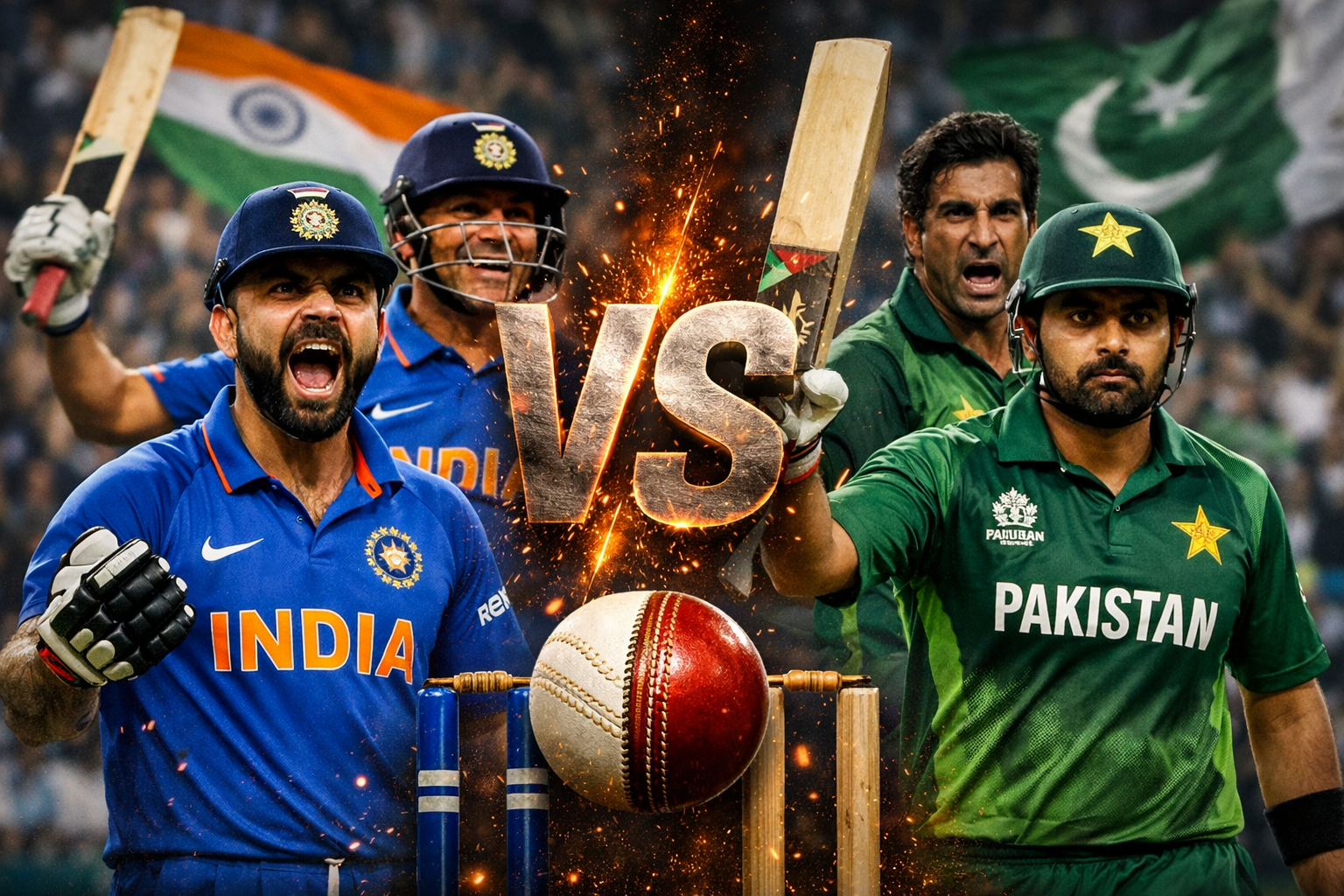
Few sporting rivalries in the world carry the emotional weight and cultural depth of the India National Cricket Team vs Pakistan National Cricket Team timeline. It is not just about bat and ball. It is about history, identity, pressure, and moments that stay etched in memory for decades.
For over seven decades, whenever India and Pakistan meet on a cricket field, the match becomes more than a fixture on the calendar. It becomes a chapter in an ongoing story—one shaped by political realities, sporting excellence, heartbreak, and unforgettable performances.
This timeline traces how the rivalry evolved from cautious beginnings in the 1950s to the high-voltage global spectacles we see today.
The Early Years: 1952–1960s – A Rivalry Begins
The first official Test series between India and Pakistan took place in 1952, just five years after Partition. Pakistan toured India for a five-match Test series, marking the start of a cricketing relationship layered with political tension.
In those early years, the matches were competitive but not yet explosive. The teams were still finding their identity. Cricket was a bridge as much as a battlefield. Series were played sporadically, often influenced by diplomatic conditions rather than pure sporting schedules.
During the 1950s and 1960s, encounters were infrequent. Tours were long, traditional Test series, with players like Hanif Mohammad and Polly Umrigar shaping the early tone of competition. It was competitive cricket, but the rivalry had not yet reached its later emotional intensity.
The 1970s: Revival and Rising Intensity
After a long gap due to political tensions and wars, bilateral cricket resumed in 1978 when India toured Pakistan. This marked a new phase.
By this time, limited-overs cricket had entered the scene. The introduction of One Day Internationals (ODIs) added urgency and sharper drama. The shorter format made every encounter feel decisive.
Players like Sunil Gavaskar, Kapil Dev, Imran Khan, and Javed Miandad gave the rivalry a stronger personality. Matches became tighter, more competitive, and increasingly watched across both nations.
One moment from this era still echoes: Javed Miandad’s last-ball six off Chetan Sharma in the 1986 Austral-Asia Cup final. It wasn’t just a winning shot. It became symbolic of the emotional volatility of India–Pakistan cricket.
The 1990s: The Rivalry Goes Global
If the 1980s built the rivalry, the 1990s globalized it.
Satellite television expanded viewership. World Cups became major battlegrounds. The matches were no longer limited to bilateral series; they now carried global stakes.
1992 Cricket World Cup – First World Cup Meeting
India and Pakistan met for the first time in a World Cup in 1992. India won, setting the tone for what would become a long-standing pattern: India dominating Pakistan in 50-over World Cup matches.
That psychological edge grew over time. For Pakistani fans, breaking that streak became a matter of pride. For Indian supporters, maintaining it became equally significant.
Sharjah and Desert Storm Era
The 1990s also saw numerous high-profile ODI tournaments in Sharjah. Crowds packed the stadiums. Television audiences ran into millions.
Sachin Tendulkar emerged as a central figure in the rivalry. His innings against Pakistan often carried extra significance. Wasim Akram, Waqar Younis, and Shoaib Akhtar brought pace and aggression. The contests felt personal, even when they weren’t.
1999 Chennai Test: Cricket at Its Most Emotional
The 1999 Test in Chennai remains one of the most powerful chapters in the India National Cricket Team vs Pakistan National Cricket Team timeline.
Chasing 271, India nearly pulled off a remarkable victory, with Sachin Tendulkar scoring a fighting 136 despite severe back pain. India fell short by 12 runs.
What made the moment historic was the crowd reaction. Despite the heartbreak, Indian fans gave Pakistan a standing ovation during their victory lap. It was a rare display of sporting respect in a rivalry often defined by intensity.
It showed that beneath the tension, cricketing appreciation still existed.
2000s: Diplomacy, Drama, and World Cup Clashes
The early 2000s were shaped by both diplomatic freezes and cricketing breakthroughs.
2003 Cricket World Cup – Centurion Classic
India’s win over Pakistan in the 2003 World Cup is often remembered for Sachin Tendulkar’s 98 against a fearsome pace attack. His upper cut off Shoaib Akhtar remains one of the most replayed shots in cricket history.
That victory extended India’s unbeaten World Cup streak against Pakistan and reinforced the mental barrier narrative.
2004 Tour of Pakistan – Cricket Diplomacy
In 2004, India toured Pakistan after a long break. It was widely described as “cricket diplomacy.” Fans crossed borders in large numbers. The atmosphere, though competitive, was surprisingly warm.
India won the ODI series; Pakistan claimed the Test series. More importantly, the tour temporarily softened perceptions on both sides.
2007 T20 World Cup Final: A New Chapter
The inaugural ICC T20 World Cup in 2007 added another dramatic twist.
India and Pakistan met twice in the tournament, including the final. The group-stage game ended in a rare bowl-out after a tie. In the final, India defended a modest total, with Misbah-ul-Haq’s attempted scoop shot landing in Sreesanth’s hands.
India won the title. The format was new, but the rivalry instantly adapted. T20 added speed and unpredictability, intensifying every encounter.
2011 World Cup Semi-Final: Pressure Beyond Cricket
The 2011 ICC Cricket World Cup semi-final in Mohali was more than a knockout match. It carried enormous political and public attention. The prime ministers of both countries attended.
India won, eventually lifting the World Cup. For many fans, that semi-final felt like a final in itself.
These high-pressure games showed how the rivalry had evolved. It was no longer frequent. Bilateral series had largely stopped after 2012–13. Most matches now occurred only in ICC tournaments or Asia Cups.
Scarcity made each encounter even more intense.
2017 Champions Trophy Final: Pakistan’s Statement
In 2017, Pakistan defeated India comprehensively in the ICC Champions Trophy final.
Led by Sarfaraz Ahmed and powered by Fakhar Zaman’s century and Mohammad Amir’s devastating opening spell, Pakistan delivered one of their most complete performances against India in a global final.
It reminded observers that while India had dominated World Cup meetings, Pakistan remained capable of producing big-match performances when least expected.
2021 T20 World Cup: Breaking the Streak
For nearly three decades, India had remained unbeaten against Pakistan in 50-over and T20 World Cups combined.
That changed in 2021.
Pakistan secured a convincing 10-wicket victory in the T20 World Cup in Dubai. Babar Azam and Mohammad Rizwan chased down the target calmly. The result carried symbolic weight—it ended a long-standing narrative.
It also demonstrated how the competitive gap between the two sides had narrowed in white-ball cricket.
Asia Cup Encounters: Frequent High-Stakes Meetings
With bilateral series limited, the Asia Cup became an important stage for India vs Pakistan clashes.
Whether in ODI or T20 format, these matches consistently draw massive viewership. Neutral venues like the UAE or Sri Lanka often host them due to political constraints.
The Asia Cup has provided multiple tight finishes, Super Four rematches, and rain-affected drama—further enriching the rivalry’s timeline.
Key Themes in the India–Pakistan Cricket Timeline
Beyond individual matches, certain themes define this rivalry:
1. Politics and Scheduling
Unlike other rivalries, India vs Pakistan fixtures depend heavily on diplomatic conditions. This irregularity adds unpredictability. There is no guaranteed annual series.
2. Psychological Edges
World Cup records, streaks, and head-to-head statistics often influence narratives. Even players acknowledge the added pressure of these games.
3. Generational Shifts
Each generation produces new heroes. From Gavaskar and Imran to Tendulkar and Wasim, to Kohli and Babar, the rivalry constantly renews itself.
4. Global Audience
Few cricket matches attract comparable global viewership. Broadcasters treat these games as marquee events, and ticket demand regularly exceeds supply.
Modern Era: Virat Kohli vs Babar Azam and Beyond
In recent years, the focus has often centered on comparisons between leading batters like Virat Kohli and Babar Azam.
Kohli’s unbeaten 82 at the 2022 T20 World Cup in Melbourne—under immense pressure—instantly joined the list of iconic India–Pakistan innings. The match reaffirmed how even in a new era, the rivalry still produces theatre.
At the same time, Pakistan’s bowling depth and India’s bench strength show that this contest is tactically complex, not merely emotional.
As cricket evolves—with franchise leagues, workload management, and packed calendars—the rarity of India–Pakistan matches may continue. That scarcity ensures every encounter carries heightened significance.
Why This Rivalry Endures
Rivalries fade when familiarity breeds routine. That has not happened here.
The India National Cricket Team vs Pakistan National Cricket Team timeline is punctuated by long gaps. Those gaps amplify anticipation. When the teams finally meet, decades of context flow into a single evening.
It is not always the highest-quality cricket. Sometimes nerves overshadow skill. But that unpredictability is part of its identity.
The rivalry endures because it is layered. Sport, history, pride, pressure, and memory intersect every time these two teams walk onto the field.
Frequently Asked Questions (FAQ)
Why don’t India and Pakistan play bilateral series regularly?
Bilateral series depend on political relations between the two countries. In recent years, matches have mostly occurred only in ICC tournaments or multi-nation events due to diplomatic considerations.
Who has a better record in World Cups?
India has historically dominated Pakistan in 50-over World Cups. However, Pakistan broke India’s unbeaten streak in T20 World Cups in 2021.
What is the most famous India vs Pakistan match?
Several matches are widely debated, including the 1999 Chennai Test, the 2007 T20 World Cup final, and the 2011 World Cup semi-final. The answer often depends on personal memory and format preference.
Why is this rivalry considered bigger than others in cricket?
The rivalry combines political history, limited opportunities to play, and massive fan bases on both sides. That mix creates emotional intensity rarely seen elsewhere in cricket.
Are modern matches as intense as older ones?
Yes, though the context has changed. Today’s games are fewer but watched by larger global audiences, which arguably increases the pressure on players.