
 MUBASHIR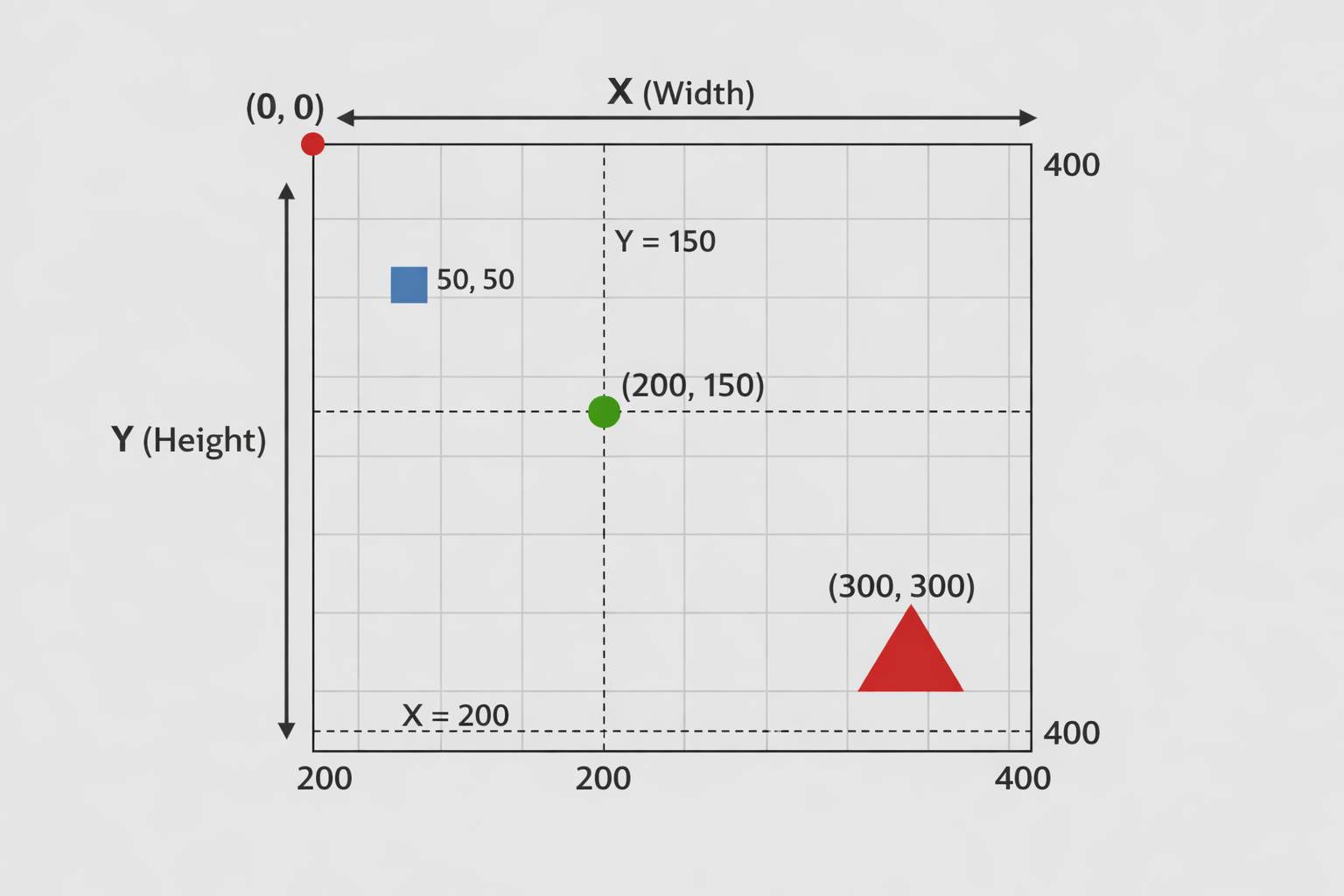
Programming is full of concepts that often feel abstract until you see them in action. For beginners learning through CodeHS, one concept that frequently comes up is coordinates, particularly in exercises labeled as 9.6.5. These exercises challenge students to understand how positions are represented on a grid, how objects move, and how to interact with graphics programmatically. While the idea of coordinates may seem straightforward, the subtleties of implementation in CodeHS can be tricky, especially for new coders.
In this article, we’ll break down what 9.6.5 coordinates are, how they work in CodeHS, and provide practical context and examples to make sense of them. This approach is designed for students, educators, and anyone curious about programming with graphics in a beginner-friendly environment.
What Are Coordinates in CodeHS?
At its core, a coordinate is a pair of numbers that describe a position on a plane. In CodeHS, which often uses a cartesian grid system, coordinates are written as (x, y):
- x-coordinate: Measures horizontal distance from the left edge of the screen.
- y-coordinate: Measures vertical distance from the top edge of the screen.
For example, (100, 50) places an object 100 pixels to the right of the left edge and 50 pixels down from the top. This system is visually intuitive once you imagine the screen as a grid, similar to graph paper.
It’s important to note that in CodeHS, the origin (0,0) is at the top-left corner, not the center. This often confuses beginners, especially those familiar with traditional math graphs where the origin is usually centered.
The Context of 9.6.5 Exercises
The numbering 9.6.5 in CodeHS refers to a lesson within the Karel the Dog or Graphics programming series. These lessons focus on applying coordinates to place objects or move them around the screen. Students are tasked with practical exercises such as:
- Moving a character to a specific location.
- Drawing shapes using coordinate positions.
- Aligning objects precisely for animations or visual designs.
This lesson serves as a bridge between basic movement commands and more advanced programming tasks. By working through 9.6.5, students not only understand coordinates but also begin to see how abstract numbers translate into visible actions on the screen.
Understanding the Screen as a Grid
To use coordinates effectively, you need to understand the screen dimensions in CodeHS. Typically, a standard graphics window might be 400 pixels wide by 400 pixels tall (though this can vary). Every object, from a rectangle to an image, is positioned based on its top-left corner by default.
Visual Example
If a student is asked to place a circle at (200, 150):
- Start at the top-left corner of the screen (0,0).
- Move 200 pixels right along the horizontal axis.
- Move 150 pixels down along the vertical axis.
- Draw or place the circle at that exact point.
This step-by-step approach helps beginners understand that coordinates are practical instructions for the computer. They’re not just numbers; they tell the program where things belong.
Common Challenges with Coordinates
Even with a clear explanation, beginners often struggle with coordinates for several reasons:
- Top-Down Y-Axis: Many students expect the y-coordinate to behave like a standard math graph, increasing upward. In CodeHS, it increases downward, which can reverse expectations.
- Off-Screen Placement: Choosing coordinates beyond the screen width or height leads to objects disappearing. Beginners often don’t account for screen limits.
- Object Dimensions: When placing larger objects, the coordinate refers to the top-left corner, not the center. This can affect alignment if students are not careful.
Understanding these subtleties ensures that exercises like 9.6.5 are completed correctly and efficiently.
Practical Applications in CodeHS
While coordinates might feel like a theoretical exercise, they are fundamental in real programming projects. Here are some practical applications students might explore:
- Game Development: Placing characters, obstacles, and goals on a screen.
- Drawing Shapes: Creating rectangles, circles, or complex designs using loops.
- Animations: Moving objects smoothly across the screen with incremental changes in coordinates.
- User Interface Design: Aligning buttons, images, and text precisely.
By mastering coordinates, beginners gain a foundation for more complex programming concepts, including loops, conditional logic, and event-driven coding.
Examples of 9.6.5 Coordinate Tasks
Here are a few examples typical of a 9.6.5 exercise:
Example 1: Drawing a Square
A common task is to draw a square at a specific location:
# Place the top-left corner of a square at (50, 50)
square = Rectangle(50, 50, 100, 100)
add(square)
In this case, Rectangle(x, y, width, height) uses coordinates (50, 50) for placement. The width and height ensure that the square is 100 pixels on each side. This example reinforces the connection between coordinates and size.
Example 2: Moving a Character
Another task might involve moving a character using coordinates:
player.setPosition(200, 150)
Here, the setPosition method tells the program exactly where the player object should appear. Unlike Karel commands like move() which increment position step by step, coordinates allow for precise placement.
Example 3: Centering an Object
If a student wants an object centered on the screen:
centerX = screen.width / 2
centerY = screen.height / 2
player.setPosition(centerX, centerY)
This example introduces dynamic calculations, showing how coordinates can adjust automatically based on screen size. It’s a simple step toward responsive design principles.
Tips for Mastering Coordinates
- Start Small: Begin with simple placements before attempting complex arrangements.
- Draw Reference Lines: Use thin lines to visualize axes and grid locations.
- Check Object Size: Remember the coordinates point to the top-left corner unless specified otherwise.
- Practice Consistently: Repetition helps reinforce the link between numbers and visual outcomes.
- Experiment: Slightly change coordinates to see how objects move or overlap—hands-on experimentation is often the fastest teacher.
Beyond 9.6.5: Why Coordinates Matter
Coordinates are a building block for more advanced programming. Once students are comfortable:
- They can create interactive animations, moving objects in response to user input.
- They can design games where placement matters, like in collision detection.
- They can understand geometry programmatically, translating mathematical concepts into visual output.
Essentially, mastering coordinates opens the door to more engaging, visually rewarding projects in CodeHS and beyond.
FAQ About 9.6.5 Coordinates in CodeHS
Q1: Why does the y-coordinate increase downward in CodeHS?
In most programming graphics environments, the top-left corner is (0,0). The y-coordinate increases downward because screens are scanned top-to-bottom for rendering pixels. It’s different from traditional math graphs but standard in programming.
Q2: What happens if I place an object outside the screen dimensions?
Objects placed beyond the screen boundaries are not visible. CodeHS will still register the object, but it won’t appear until coordinates are within the visible area.
Q3: How do I center an object on the screen using coordinates?
Divide the screen width and height by 2 to find the center coordinates, then use setPosition(centerX, centerY) or similar methods depending on the object.
Q4: Are coordinates always integers in CodeHS?
Typically, coordinates are integers, representing pixels. Some functions might accept floating-point numbers for smoother movement, but integer values are standard for placement.
Q5: Can I move objects dynamically using coordinates?
Yes. By changing coordinates within loops or functions, you can create animations or interactive movements. This is a natural next step after static placement exercises like 9.6.5.
Final Thoughts
9.6.5 coordinates in CodeHS might seem simple at first glance, but they encapsulate core programming principles: precision, visualization, and practical application. Understanding them thoroughly equips students to handle more advanced exercises, design functional graphics, and eventually create interactive projects with confidence. By experimenting, practicing, and observing the outcomes, beginners can transform abstract numbers into meaningful actions on the screen.
The lesson of coordinates extends beyond CodeHS. It’s a glimpse into how computers interpret space, movement, and relationships between objects—a foundational skill for any aspiring programmer.