
 MUBASHIR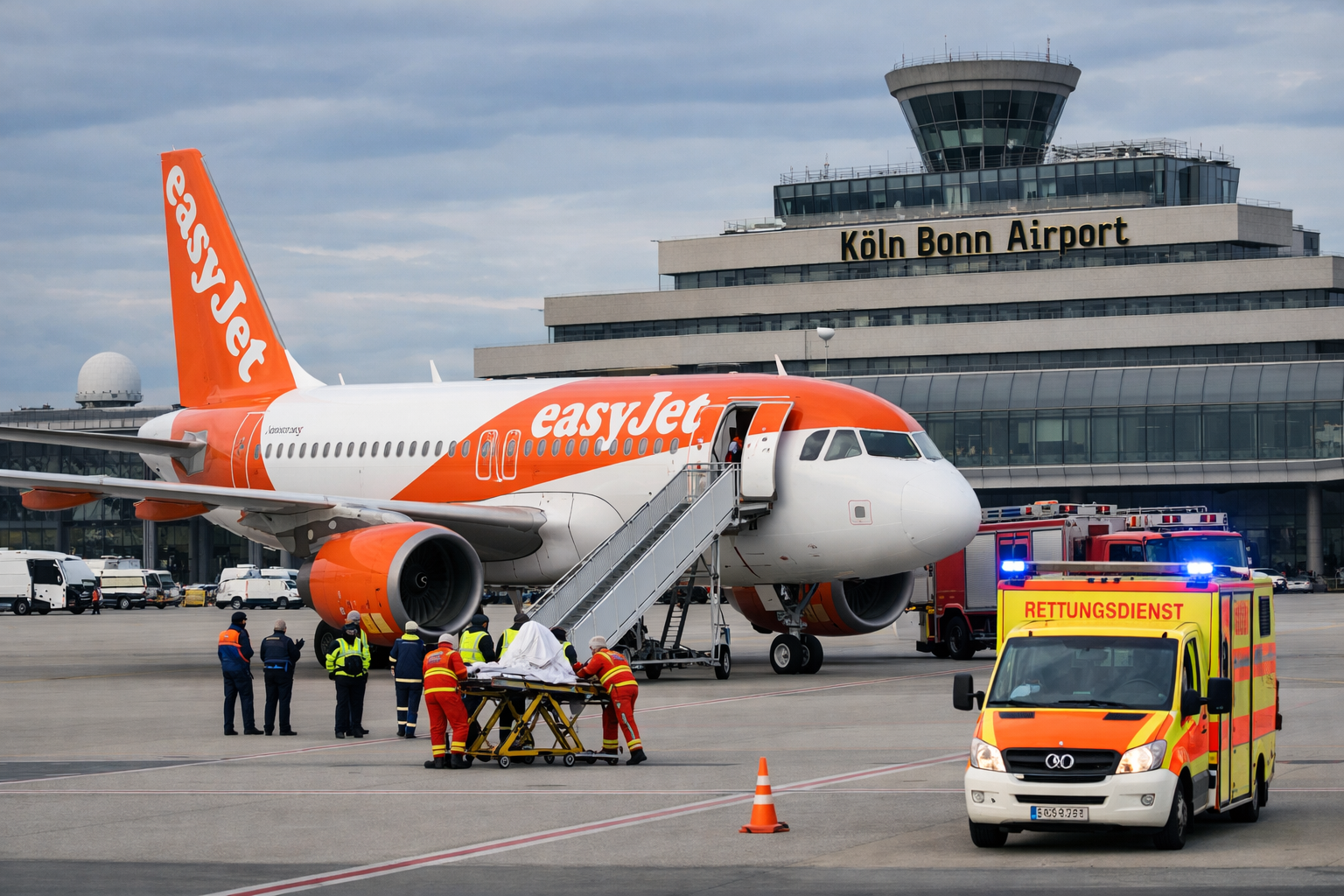
In mid‑August 2025, flight EasyJet U22152, operating from Istanbul, Turkey to Manchester, UK, declared an emergency while over German airspace and diverted to land in Cologne, Germany. The incident drew attention among flyers and aircraft trackers because it involved a sudden change in plans for a routine European route — and because public flight trace data showed the aircraft activating the international emergency code “7700.” Understanding what unfolded, why it mattered, and what passengers experienced requires looking beyond headlines and into how modern airline safety works in practice.
This event is a useful case study in how airlines and flight crews respond when unexpected health or operational issues arise mid‑air, and what it means for passengers on board and travellers observing from the ground.
What Happened: The Emergency Declaration
At cruise altitude over Germany, EasyJet U22152’s first officer became incapacitated due to severe illness, prompting the captain to declare an emergency and divert the flight to the nearest suitable airport. The Airbus A320, carrying around 185 people, was at roughly 36,000 feet when the situation unfolded.
In aviation, crews use a standard transponder code — “7700” — to signal a general emergency when there’s a situation that may affect the safety or continuation of the flight. That code alerts all relevant air traffic facilities and nearby aircraft that a significant event is in progress.
In this case, the nature of the emergency was medical rather than technical. The incapacitation of a flight officer — especially one who plays a critical role in operating the aircraft — changes the dynamic of an ongoing flight and often triggers diversion procedures.
Why the Flight Diverted to Cologne
Choosing a diversion airport isn’t random. Pilots and airline operations teams weigh several factors:
- Proximity: How close is the nearest suitable airport along the current route?
- Runway capability: Can the airport handle the aircraft type safely?
- Medical facilities: Is there a hospital or advanced medical support nearby?
- Weather and traffic: Are conditions safe for an unscheduled touchdown?
For U22152, Cologne Bonn Airport (CGN) met these criteria. The flight was approximately 150 nautical miles east‑southeast of Cologne when the issue emerged, making it a logical — and safe — decision for the captain to redirect there. The aircraft landed safely, and the first officer was taken to a local hospital for evaluation.
This kind of diversion, where a trained flight crew member becomes ill mid‑air, is rare but by no means unprecedented in commercial aviation.
What Passengers Experienced
When a flight diverts due to an emergency, passengers often feel tension — a mix of uncertainty and surprise. But what happens operationally in such moments is methodical, structured, and governed by international safety protocols.
On U22152:
- The aircraft descended from cruise altitude toward Cologne.
- Cabin crew made announcements to keep passengers informed.
- On arrival, emergency medical services boarded the plane to assist the incapacitated flight officer.
- After the situation was stabilized, a replacement pilot was dispatched so the aircraft could continue on to Manchester.
Delays in such cases are almost inevitable. Aircraft turnarounds require crew rest considerations, regulatory clearances, and logistical coordination — all of which take time.
The passengers ultimately reached Manchester with a delay of about five hours compared to the original schedule. The airline worked with ground staff to support travellers during the hold and re‑boarding process.
How Airlines Handle Emergencies Like This
When an aircraft is en route and something unexpected occurs, the airline and its crew follow established international procedures designed for safety and clarity:
1. Assess the Situation Quickly
Captains and first officers continually monitor aircraft systems and crew health. If something serious — like the incapacitation of a pilot — is detected, that assessment dictates the next steps.
2. Communicate with Air Traffic Control
Activating the emergency transponder code alerts controllers, who then vector the flight to the closest suitable landing airport. Controllers help clear airspace and prepare ground services for landing.
3. Prioritize Safety Above All
Safety takes precedence over timeliness. Even if the problem turns out to be non‑critical, diversion is often the right call when crew capability or passenger safety could be compromised.
4. Coordinate with Medical Teams
If a medical emergency is suspected, airlines ensure paramedics or physicians are ready on the ground. This can be particularly important for crew members who must remain in good health to operate aircraft at high altitudes and in complex airspace environments.
5. Logistics Follow‑Up
Once on the ground, airlines need to manage connections, crew duty limits, passenger care, and onward travel arrangements.
These steps are fundamental to horizon‑to‑horizon airline safety, and they’re applied whether the diversion is due to health, technical fault, weather, or another unforeseen factor.
What “Squawk 7700” Really Means
A term that often shows up in flight tracking data is “squawk 7700.” This refers to a four‑digit code set by the aircraft’s transponder when the pilots declare an emergency.
Rather than indicating a specific type of problem, it’s a broad declaration of distress that tells controllers and other nearby aircraft: “This flight has an urgent issue.” It doesn’t imply imminent danger, but it does ensure the flight receives priority handling.
Pilots have authority to set this code for medical emergencies, critical system failures, severe weather encounters, or other situations that require deviation from the flight plan.
For U22152, setting 7700 was the right procedural choice when a key flight crew member became unable to continue. Ground teams and controllers treat 7700 aircraft with high attention until the flight is safely on the ground.
Why This Is Not Cause for Widespread Alarm
It’s understandable that when you hear “emergency declaration,” some travellers worry. But it’s important to recognize:
- Modern aviation equips aircraft with redundant systems and trained professionals capable of handling emergencies calmly. Aircraft manufacturers and airlines train crew extensively for scenarios just like this.
- Medical issues can affect anyone, including crew. There are health screening protocols, but certain conditions like sudden illness may not be foreseeable.
- Diverting to the nearest safe airport is both prudent and standard practice. It’s what keeps everyone on board safer than continuing to a destination that’s farther away.
Most diversions do not result in injuries or lasting issues; they reflect the system working as intended.
Broader Context: EasyJet and In‑Flight Diversions
Incidents involving diversions or emergency declarations — whether medical, technical, or passenger-related — are not unique to one airline. Across global aviation, such events serve as reminders of how dynamic weather, human health, aircraft systems, and air traffic patterns can be.
EasyJet itself has seen a range of diversions in recent years, including other aircraft diverting due to cockpit smoke sensations, medical situations, or passenger disruptions. Each case follows a similar pattern: swift assessment, controlled diversion, and prioritization of passenger and crew safety.
Understanding the U22152 event in this context shows that despite the headline framing of “emergency,” the response was measured, structured, and in line with aviation best practices.
Frequently Asked Questions about EasyJet U22152 Emergency
Why did EasyJet flight U22152 divert to Germany?
The captain diverted the aircraft to Cologne after the first officer became incapacitated mid-flight. Diverting to the nearest suitable airport ensured safety and access to medical care.
What does it mean when a flight squawks 7700?
Squawk 7700 is a universal emergency transponder code that alerts air traffic control and surrounding aircraft that the flight needs priority handling due to an urgent situation.
Were passengers at risk during the diversion?
No evidence suggests that passengers were at risk. The diversion was precautionary and followed standard safety protocols for a crew-related emergency.
Did the flight continue to Manchester?
Yes, after the first officer was taken for medical care and a replacement was arranged, the flight resumed and reached Manchester several hours later.
Do diversions like this happen often?
They’re relatively uncommon but not rare. Airlines across the world experience diversions for medical, technical, or weather-related reasons every year.
Will passengers receive compensation for the delay?
Compensation depends on airline policy and applicable regulation. Passengers typically need to contact the airline’s customer service or claims department for details, as each case varies.